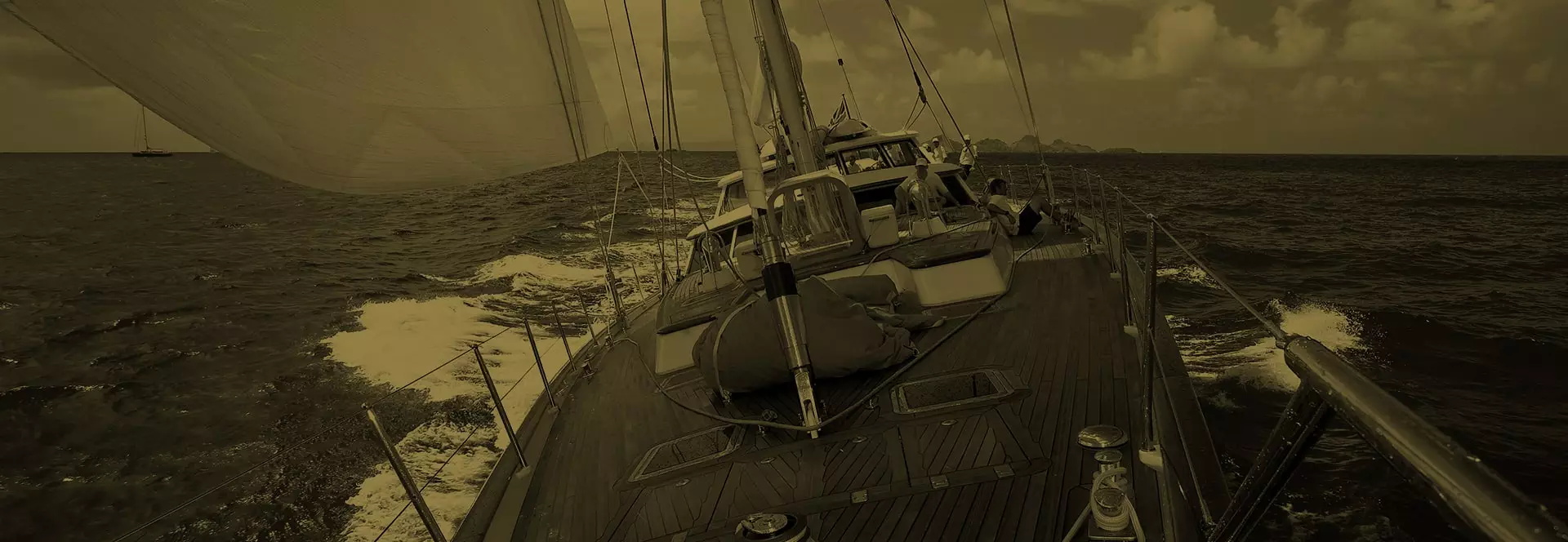
Have you ever noticed how a simple walk by a lake or a day out at sea seems to wash away your stress? It isn’t just in your head—or rather, it is in your head, but there is a fascinating scientific reason for it.
At Wellington Yacht Partners, we believe that our relationship with the water is about more than just sport; it’s about well-being. Today, we’re diving into the Blue Mind Theory, a concept popularized by marine biologist Dr. Wallace J. Nichols, which explains why humans are biologically hardwired to find peace near the water.
This post is inspired by the insights shared in the RYA article, Blue Mind Theory: Why Being at Sea is Good for Your Mental Health, produced in partnership with Bupa Insured Health.
What is Blue Mind Theory?
In our modern, fast-paced world, many of us live in a state of “Red Mind.” This is a state of chronic stress, overstimulation, and anxiety driven by constant digital pings and the pressures of daily life.
“Blue Mind” is the antidote. It is the mildly meditative state we fall into when we are near, in, on, or under water. Research shows that being close to water triggers a positive neurological response, shifting our brains from a state of “fight or flight” to “rest and digest.”
5 Scientifically-Backed Benefits of Being Near the Water
According to research shared by RYA partner Bupa Insured Health, the benefits of the “Blue Mind” state are tangible and transformative:
1. A Natural Stress Reliever
Proximity to water has been shown to lower cortisol (the stress hormone) levels and increase the production of “feel-good” neurotransmitters like dopamine and serotonin. Even the sound of waves—often referred to as “pink noise”—can synchronize with our brainwaves to induce deep relaxation.
2. The Power of “Negative Ions”
If you’ve ever felt like sea air is “cleaner,” you’re right. When water molecules collide—like in crashing waves or waterfalls—they create negative air ions. These ions, when breathed in, are believed to boost our immune systems and improve our mood and cognitive performance.
3. Boosted Creativity and Focus
When we stare at the horizon or the rhythmic movement of the tide, our brains enter a state of “involuntary attention.” Unlike the focused attention required for work, this allows our minds to wander, leading to breakthroughs in problem-solving and a surge in creative thinking.
4. The “Fluidity” Effect
Interestingly, the physical sensation of moving with the water—whether it’s the bobbing of a boat or the flow of a tide—has been linked to enhanced motivation. The experience of fluidity in our environment helps us feel more adaptable and less “stuck” in our mental loops.
5. Improved Sleep and Physical Health
The calming effect of blue spaces doesn’t end when you leave the shore. Those who spend regular time near water often report better quality sleep and lower blood pressure. It has even been found to help manage symptoms of PTSD, anxiety, and depression.
How to Get Your “Blue Mind” Fix
You don’t need to be an offshore sailor to reap these rewards. Here are a few ways to incorporate Blue Mind Theory into your life:
Conclusion
The sea isn’t just a playground—it’s a sanctuary. Whether you are navigating a yacht or simply sitting on a pier, the water is working to heal your mind and restore your balance. For a deeper dive into the science of blue spaces, we highly recommend reading the full article on the RYA website.
Ready to find your Blue Mind? Check out our listings to help you get back on the water and start your journey toward better mental well-being. https://www.wellingtonyachts.com/
There is a certain silhouette that just belongs in the harbors of New England. We know it well—the classic lines, the Downeast soul, and the promise of a smooth ride even when the water gets choppy.
But recently, a newcomer has been turning heads at the docks, bringing a refined British sensibility to our familiar waters.
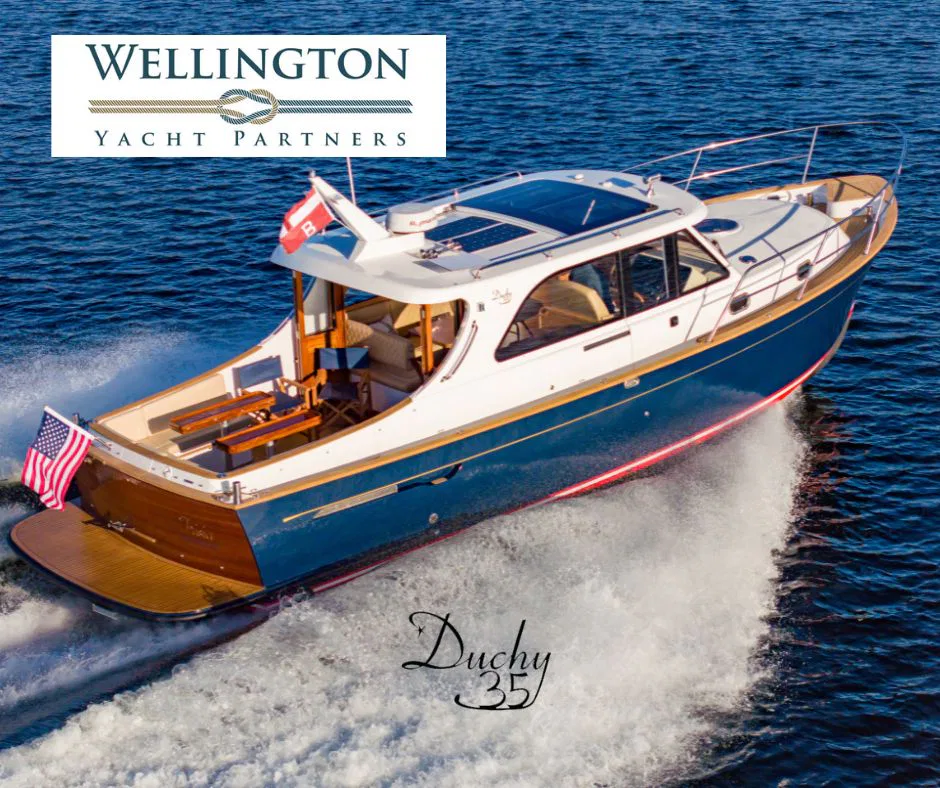
The Duchy 35, built by the boutique English shipyard Cockwells, recently made its U.S. debut, and the team at Power & Motoryacht wasted no time getting it out for a sea trial. Editor-in-Chief Dan Harding took the helm in New England to see if this “British Downeast” could live up to the hype.
Watch the Walkthrough:
Why Power & Motor Yachts Loved It
After an impressive sea trial, Power & Motor Yacht walked away highlighting a few standout features that make the Duchy 35 an exceptional day boat and weekender:
Why We’re Watching Cockwells
It isn’t often that a “new” brand feels this established. Cockwells has managed to capture the heritage of wooden boatbuilding and translate it into a modern, low-maintenance composite vessel that doesn’t lose its soul.
For those who appreciate the craftsmanship of a Hinckley or the sturdiness of an Outbound, the Duchy 35 offers a fresh, sophisticated perspective on the 35-foot cruiser.
Are you ready to see the Duchy 35 in person?
Keep an eye on our upcoming Newport International Boatshow or contact us today to learn more about this modern classic.
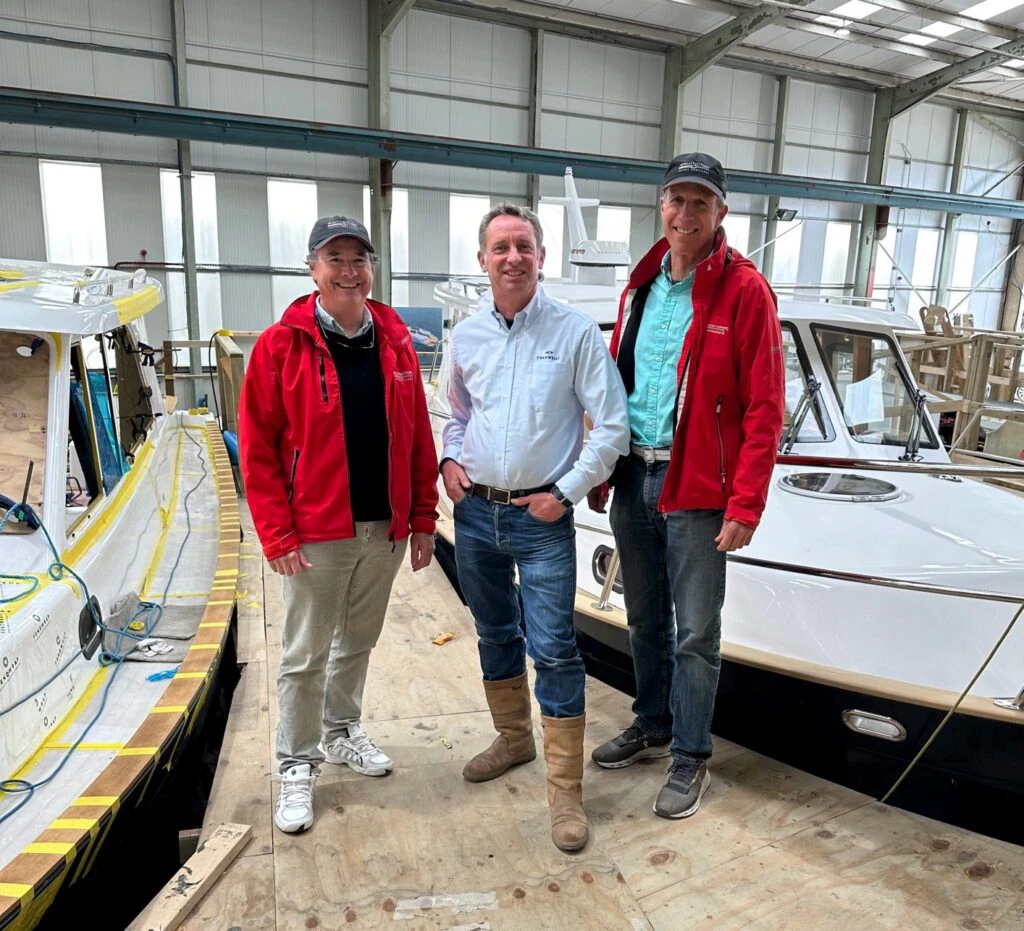
Meet the Visionary: Dave Cockwell & the Evolution of Duchy Motor Launches
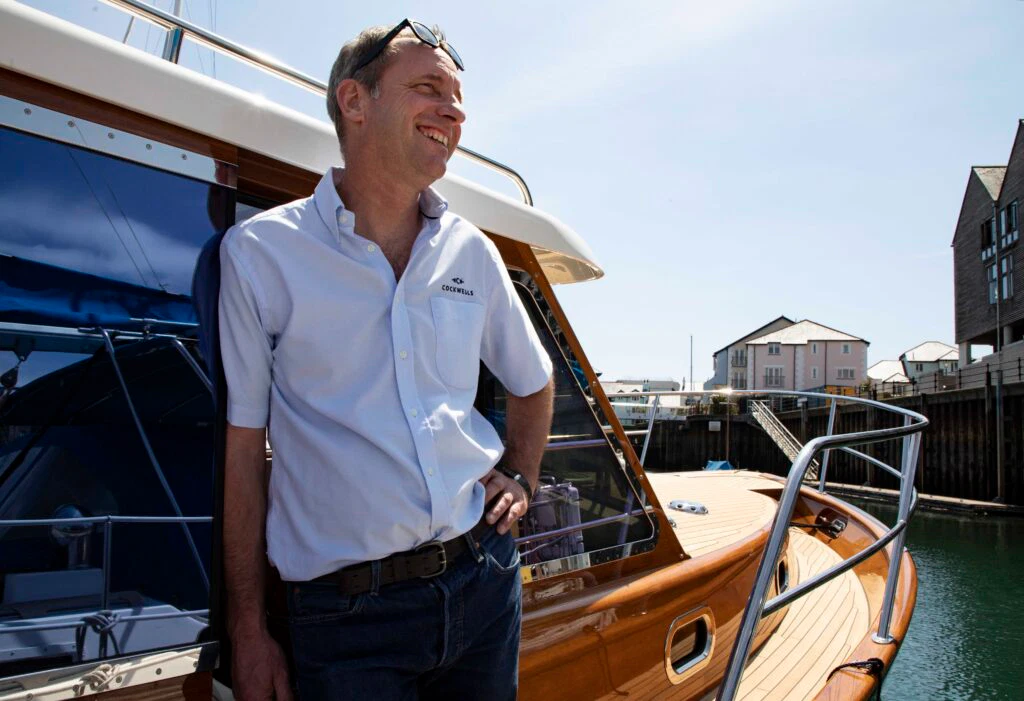
As the exclusive North American representatives for the Duchy line, Wellington Yacht Partners is proud to connect discerning American boaters with a legacy rooted in English craftsmanship. This spring, that connection becomes even more tangible as we welcome the spirit—and the visionary—behind the brand directly to our docks.
A Lifelong Calling Shaped by Water and Wood
For Dave Cockwell, boatbuilding was never just a career—it was inevitable.
His story begins along the working docks of Bristol, where as a young boy he learned to navigate boats and operate cranes before most kids had their first summer job. By his early teens, he was salvaging and restoring derelict vessels, quickly earning a reputation as the one who could fix anything. That early hands-on experience laid the foundation for what would become a defining philosophy: boats should not only function flawlessly, they should feel right—balanced in line, proportion, and purpose.
Today, that same philosophy drives every build at Cockwells’ Mylor Creek Boatyard in Cornwall. Dave remains, in his own words, a “traditional boatbuilder in a modern world.” His team favors time-honored materials like teak, mahogany, and English oak over mass-produced alternatives. The result is a fleet of vessels that are as structurally sound as they are visually timeless—each one a masterclass in craftsmanship, with hand-finished joinery, dovetailed details, and hardware designed to last generations.
As Dave often says: “If your lines flow properly and your proportions are right, the boat will behave properly… and it will just look right.”
From Humble Beginnings to Global Recognition
Cockwells’ rise is a story of persistence, skill, and seizing opportunity.
From rebuilding wrecks as a teenager to working across a wide range of boatyards and materials, Dave honed his craft through experience. In the mid-1990s, he began building his own business from a modest space, taking on everything from ferry refits to custom builds. A pivotal moment came in the early 2000s, when one of his classically styled wooden motorboats debuted at the Southampton Boat Show—standing out in a sea of fiberglass production boats. The response was immediate and overwhelming.
From there, Cockwells grew into a world-class operation, now employing over 140 skilled craftsmen and producing everything from bespoke superyacht tenders to the refined Duchy Motor Launch range. Despite that growth, the ethos has never changed: deliver exceptional quality, every time.
A New Era: The Pendennis Partnership
The future of Cockwells—and the Duchy line—has never looked brighter.
In a landmark move for the Cornish marine industry, Pendennis Shipyard has taken a majority interest in Cockwells. This partnership brings together two globally respected names in yacht building, combining Cockwells’ artisanal craftsmanship with Pendennis’ superyacht expertise and international reach.
Importantly, Cockwells continues to operate independently, with Dave Cockwell at the helm as Sales and Technical Director. What this partnership enables is growth without compromise—supporting the development of new, larger models like the highly anticipated Duchy 45 while preserving the meticulous attention to detail that defines every Cockwells build.
A Rare Opportunity: Meet Dave in Person
This April, we’re bringing that story to life in an exciting way.
Dave Cockwell will be joining the Wellington Yacht Partners team at the Connecticut Spring Boat Show (April 24–26), offering a rare opportunity to meet the man behind the brand. For owners, enthusiasts, and anyone who appreciates fine craftsmanship, it’s a chance to hear firsthand about the design philosophy, materials, and techniques that set Duchy yachts apart.
Two Standout Models on Display
The show will also mark two major milestones for Duchy in North America:
The U.S. Debut of the Duchy 35
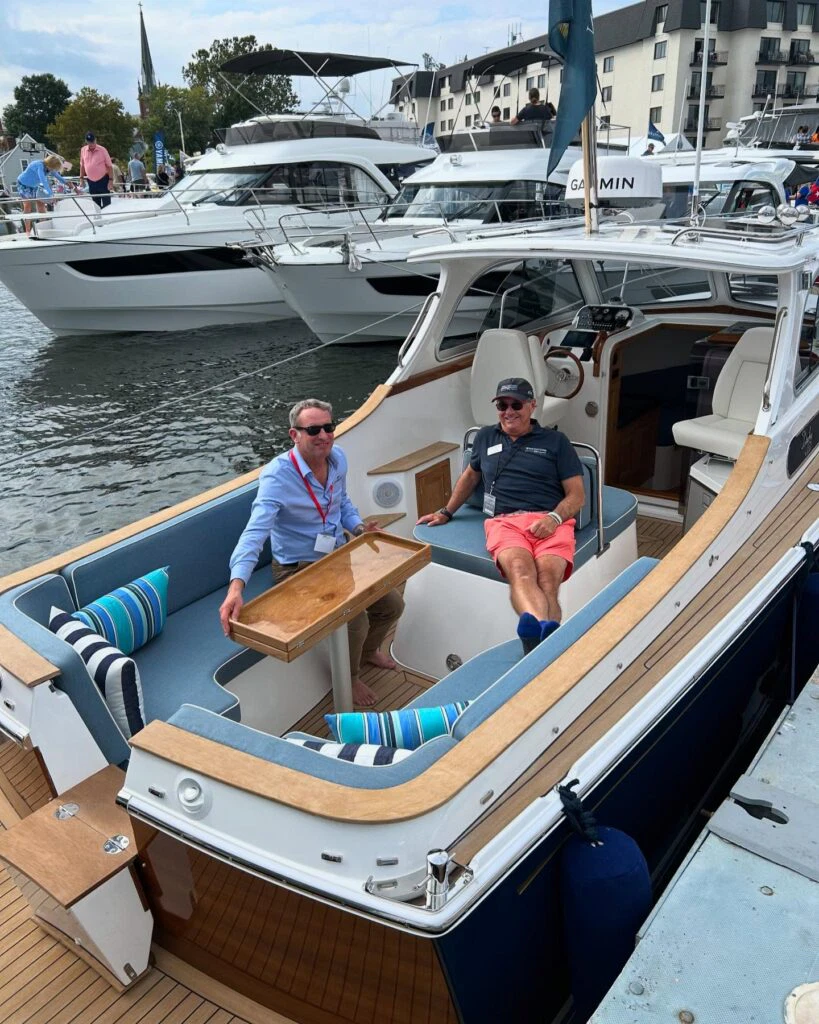
Making its first appearance on American shores, the Duchy 35 blends modern usability with classic styling. Recently delivered to its new U.S. owners, it features an “ultimate social deck” layout—perfect for entertaining—paired with the exceptional build quality that has earned global acclaim.
The Duchy 27
Also on display, the Duchy 27 offers an ideal introduction to the brand. Nimble, elegant, and beautifully finished, it showcases signature elements like rich teak decking and custom stainless steel detailing—hallmarks of Dave’s uncompromising approach to design.
Experience Duchy in Essex
We invite you to step aboard and experience these yachts in person at Safe Harbor Essex Island (Berths 1 & 2). Whether you’re drawn by the artistry of traditional boatbuilding or searching for a yacht that delivers both performance and presence, the Duchy line offers something truly distinctive.
These are boats built not just to be owned—but to be admired, enjoyed, and passed down.
Ready to Step Onboard?
Contact Wellington Yacht Partners to schedule a private showing and meet Dave Cockwell during the Connecticut Spring Boat Show.
Discover what happens when heritage craftsmanship meets modern innovation—and why more American owners are turning to Duchy as the new standard for luxury on the water.
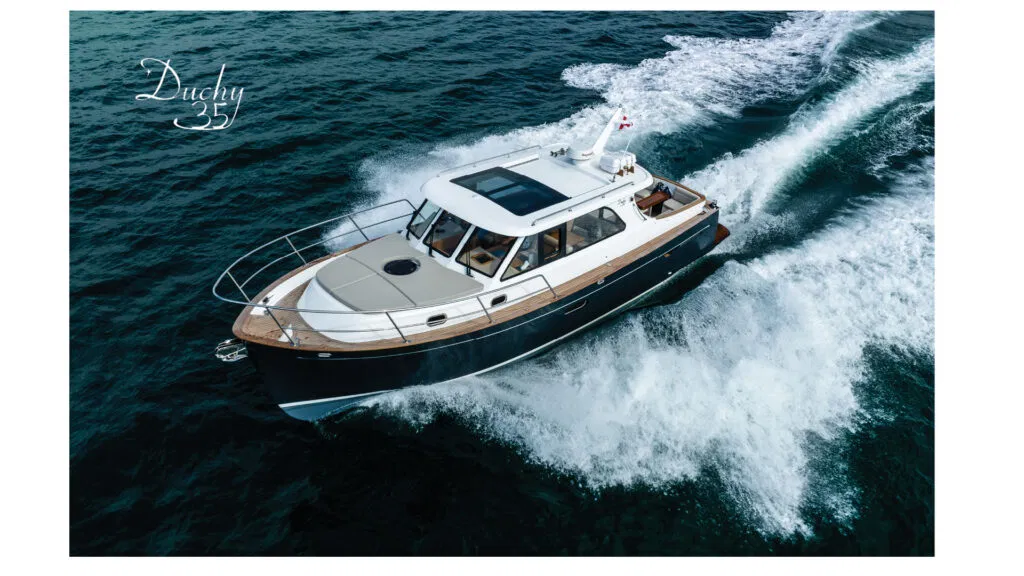
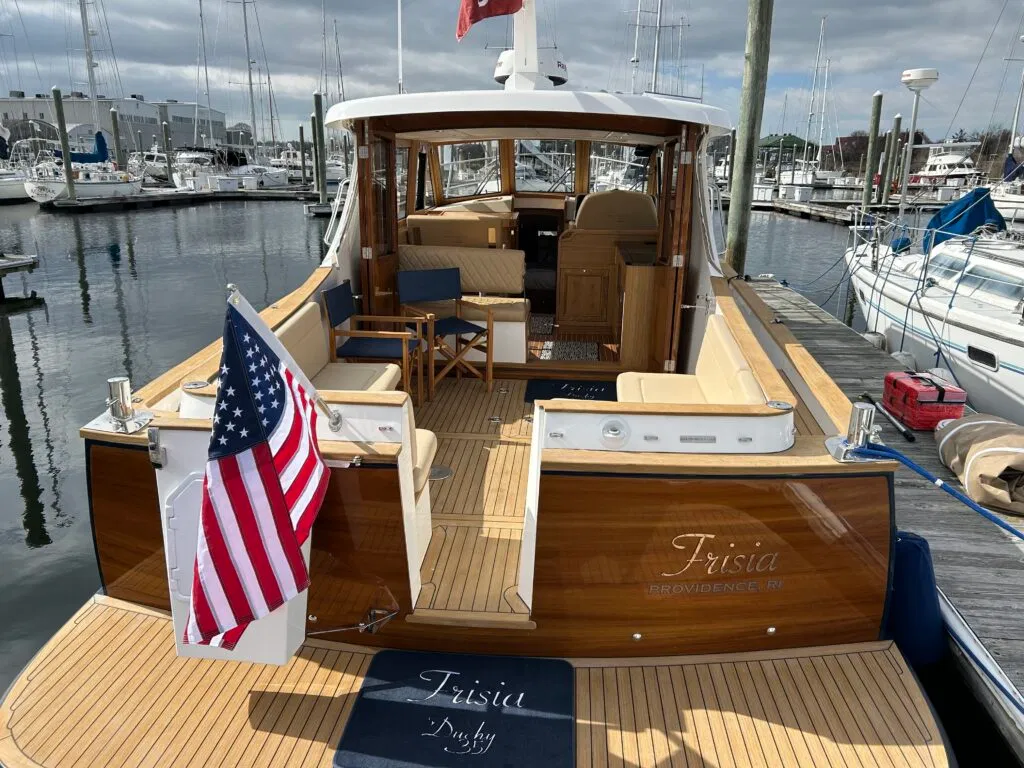
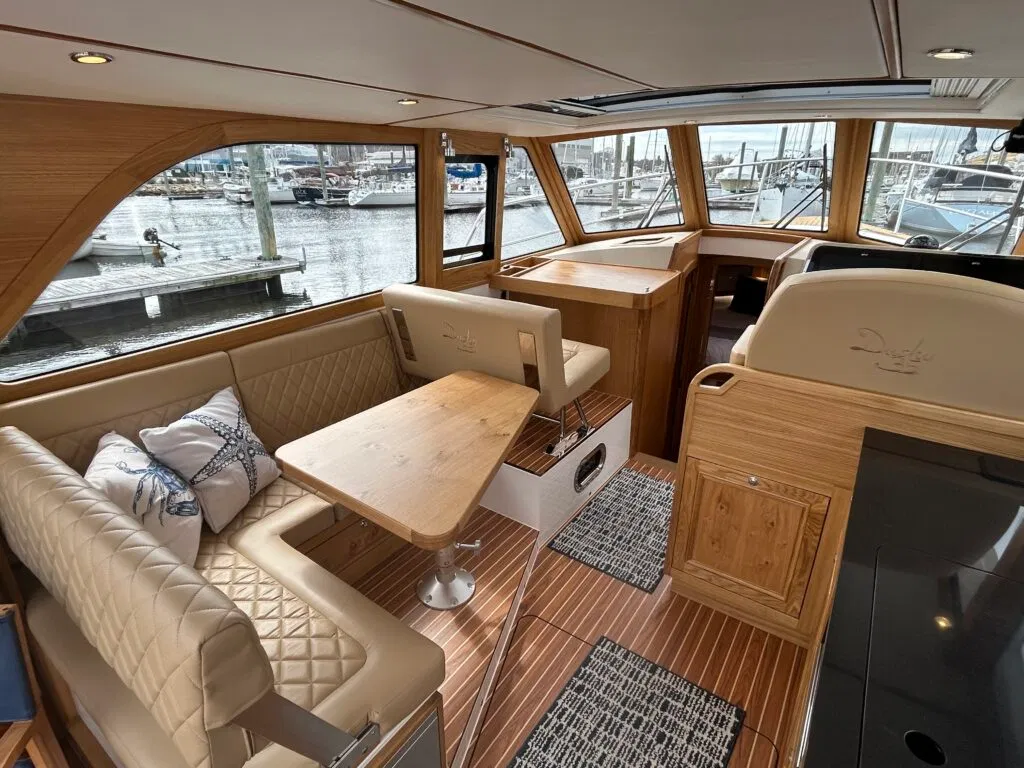
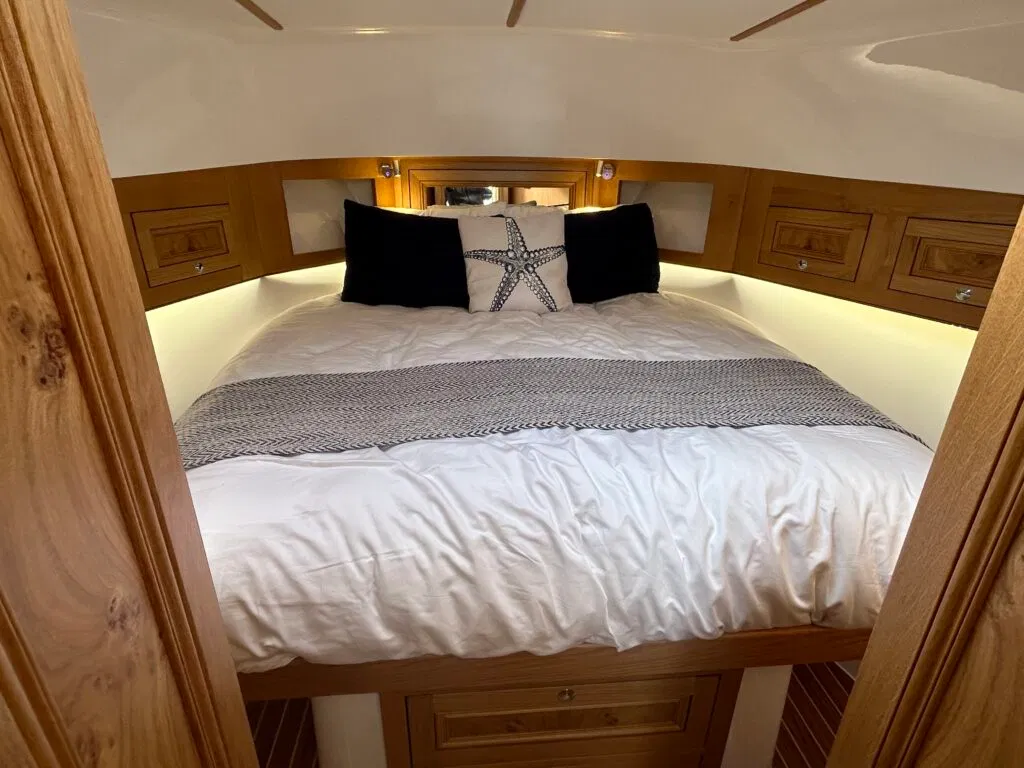
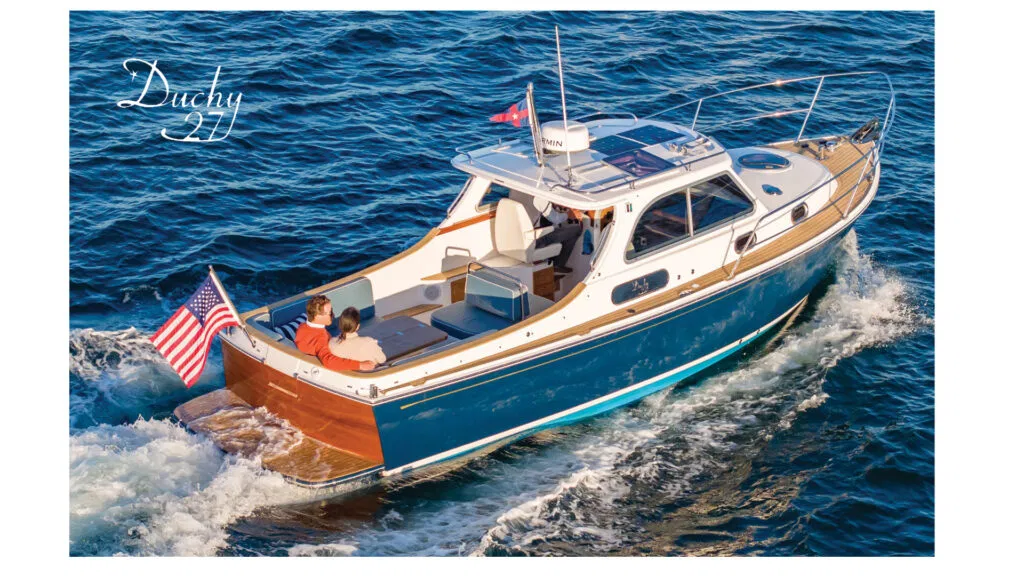
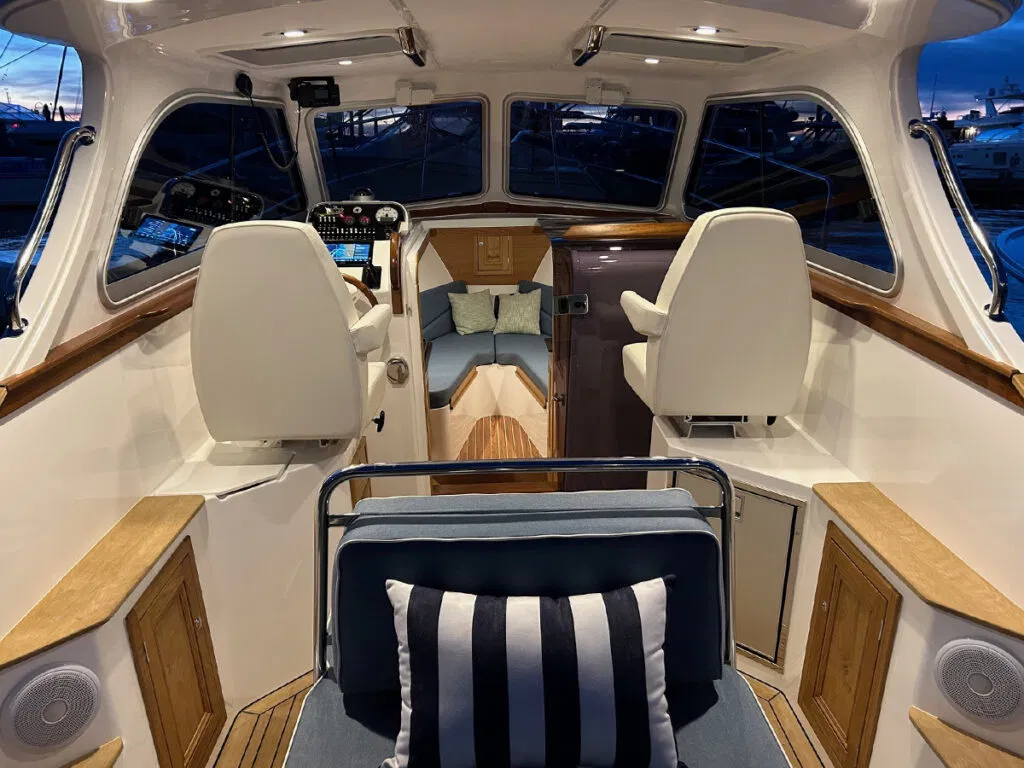
This year, Wellington Yachts is pleased to be exhibiting two very special yachts: the 2026 Duchy 35 (newly arrived from the UK) and her little sister, the 2025 Duchy 27. Designed and built by the renowned Cockwells Modern and Classic Boatbuilders in Cornwall, UK, the award-winning Duchy range combines elegant styling, traditional craftsmanship and relaxed handling with up-to-date build techniques and innovative technology.
Ten Years of Launching the Boating Season!
For the 10th year, the Connecticut Spring Boat Show returns to historic Essex, uniting boaters, builders, and marine businesses along the Connecticut River—set within a town celebrating 250 years and honoring the past, present, and future of boating.
The 2025 Show featured 70 boats on display and over 50 exhibitors. Together with our sponsors and 2,000+ attendees, we raised over $17,000 for Sails Up 4 Cancer. While weather dampened some of the action planned for the five bands on the docket, 2026 promises even more—with expanded performance and exhibit areas and an even larger lineup of boats.
This is a rain or shine event. Children 13 and under are free when accompanied by a paid adult; please be sure to select a Children’s ticket when purchasing online. Each ticket/bracelet provides entrance for all three days.
The show is produced by WindCheck Magazine and hosted by Safe Harbor Essex Island. 2025 sponsors include Essex Boat Works, Maritime Insurance International, Surfridge Brewing Co., Mohegan Sun Casino, Yacht Brokers Association of America (YBAA), Risk Strategies/Gowrie Group, The Griswold Inn, The Essex Steam Train & Riverboat, Experience Essex, and Saybrook Point Resort & Marina.
Buy tickets here:
At Wellington Yacht Partners, we take pride in representing brands and builders who exemplify uncompromising craftsmanship, engineering excellence, and thoughtful design. The January 2026 update from The Pendennis Group showcases an impressive year of expansion and innovation—particularly through their deepening collaboration with Cockwells, one of the world’s most respected creators of bespoke superyacht tenders and builders of the DUCHY line of Motor Launches, which Wellington represents exclusively in North America.
Pendennis: Four Decades of Growth and Innovation
Since its founding in 1988, Pendennis has evolved into a global leader in custom yacht construction, restoration, and refit. Recent strategic developments—including the expansion of Pendennis Vilanova in the Mediterranean and the acquisition of Norfolk Interiors—underscore the Group’s commitment to craftsmanship and modern capability.
In late 2024, Pendennis invested in Cockwells, uniting two British powerhouses that share core values in quality, client service, and the training of future artisans.
Cockwells: Bespoke Tender Building at Its Finest
Cockwells has grown from a family-run workshop into one of the most respected tender builders in the world. Working from 4,000m² of dedicated facilities in Falmouth, their team blends advanced composite construction, CNC‑cut moldings, digital switching, and exceptional joinery to create tailor‑made vessels for superyachts across the globe.
As Pendennis’ Group Commercial Director Stephen Hills observes, the pride within the Cockwells yard is unmistakable—a reflection of the skill and passion behind every custom build.
Highlights From Recent Cockwells Tender Projects
T/T Nautilus (Ex. T/T Grace E)
The first superyacht tender ever built by Cockwells, T/T Nautilus features an epoxy foam‑sandwich hull, teak decking, joystick controls with an integrated bow thruster, and a top speed exceeding 40 knots. Now back in the yard for a significant 15‑year refit—including new engines, jets, and a comprehensive rewire—she continues to represent Cockwells’ enduring quality.
MY BLUE: Performance Catamarans
Built for Lürssen’s 160m BLUE, Cockwells’ 12.3m Limousine Catamaran and 11.7m Open Sport Catamaran reach speeds up to 52 knots while providing exceptional stability and comfort. Touchscreen control, joystick docking, and height‑adjustable structures elevate both practicality and guest experience.
MY Renaissance: A Quartet of Distinctive Tenders
For the 112m Renaissance, Cockwells delivered four bespoke tenders:
Each one is meticulously engineered to integrate seamlessly into the yacht’s tender bay.
Wellington Yacht Partners: Exclusive North American Dealer for Duchy Motor Yachts
As Cockwells continues to expand its reach and capabilities, we are proud to serve as the exclusive North American dealer for the Duchy Motor Yacht Range, Cockwells’ acclaimed line of semi-custom, handcrafted motor yachts.
The Duchy range embodies everything we value—timeless design, advanced engineering, and bespoke detailing tailored to each owner’s lifestyle. Whether clients seek a refined dayboat, a family cruiser, or something special in between, the Duchy Motor Yacht series delivers standout quality backed by Cockwells’ world‑class craftsmanship with direct support from Wellington in North America.
Commissioning a Duchy is a deeply personal, comprehensive design experience—from interior layouts down to upholstery, electronics, and even bespoke glassware and galley amenities. Our team works closely with Cockwells’ designers and build specialists to guide North American clients through every step—from specification and customization to delivery and training.
For us, this partnership goes beyond exceptional yachts—it’s about the people behind them. Working with Dave Cockwell and his team is a unique experience. Dave’s background as a custom builder, boat owner and competitive sailor, combined with his authentic charm and charisma, fosters a culture of integrity, collaboration, and excellence at Cockwells that aligns seamlessly with our own at Wellington. We’re proud to work alongside a team that brings both heart and mastery to everything they build.
If you’re exploring a Duchy Motor Yacht or commissioning a custom tender, we would be delighted to assist. https://www.wellingtonyachts.com/contact
As the sailing world’s favorite wood becomes increasingly difficult to source, potential alternatives abound. The question is: what tradeoffs need to be made?
By Adam Cove
Technical Editor SAIL Magazine
October 6, 2025
Close your eyes. Imagine sanding the bare wood coaming on an older sloop or the toerail of a traditional yawl. Envision the first time you walked into the wood shop of a boatyard or boatbuilder. Do you smell those warm, rich, leathery notes? It’s a touch sweet with maybe the faintest bit of spice.
That’s teak: a wood we have all come to associate with being resilient in marine environments and beautiful enough to embellish our boats with its warm varnished glow or soft gray weathered presence.
Teak has been used in boatbuilding for thousands of years. It holds origins in India and on the border of Myanmar (formerly Burma) and Laos, and has naturally spread through South and Southeast Asia over time. With credit to its tight grain and natural oil, it’s dimensionally stable (doesn’t warp easily); strong, and highly resistant to rot and pests. It’s also a beautiful wood.
In the age of wooden ships, the western world discovered teak’s maritime value, a secret that locals had known for thousands of years. Trade extended to Europe and with time, the rest of the world. The British and Dutch colonization of Burma and Indonesia, in conquest of such natural resources, emphasized the increasing demand for teak. While fully wooden boats are less common today, teak is still used for trim accents, steering wheels, decking, and other functional parts onboard. The use of it has become tradition in the marine trades, with its appeal passed down like DNA from one generation to the next.
Teak can still be sourced from plantations, but they’re unable to keep up with the demand for old-growth lumber. Photo from Shutterstock
Teak is still only natural to South and Southeast Asia: just Bangladesh, India, Indonesia, Laos, Malaysia, Myanmar, Sri Lanka, and Thailand. These old-growth forests hold the large deciduous teak trees that produce fragrant white flowers and can tower near 130 feet tall. The most mature are over 200 years old, with some documented at over 1,000 years, but most are harvested at 50 to 80 years of age. In the boatbuilding industry, we know these teak trees for only the lumber that they produce: high density, tight straight grain, with a rich color and protective oils.
Over half of the world’s natural teak resources are in Myanmar. They were long the world’s leading supplier. Recent years have brought about sanctions and American and European import bans on their teak due to environmental and geopolitical concerns. Myanmar’s lush forests are being depleted at a dangerous rate, inundated with illegal logging and lacking regulation, threatening fragile ecosystems. Logging also amplifies the human rights abuses of an ongoing civil war. Since a 2021 military coup, there has been increased government control over exports and therefore incoming funds.
A supply crunch has followed, driving up prices of any available old growth product, as the marine, furniture, and construction industries battle for what is available.
The high silica content in Myanmar’s soil is critical to teak lumber exhibiting its desired properties. Combine that with the favorable tropical growing climate, with distinct wet and dry seasons, and there are few places that can equal the growing power and quality of Myanmar’s forests.
Even including neighboring stock, the finite resources of the old-growth forests cannot sustainably match today’s demand for teak lumber. Sourcing naturally grown teak for boatbuilding will be extremely limited going forward. The future of teak lies in the alternatives.
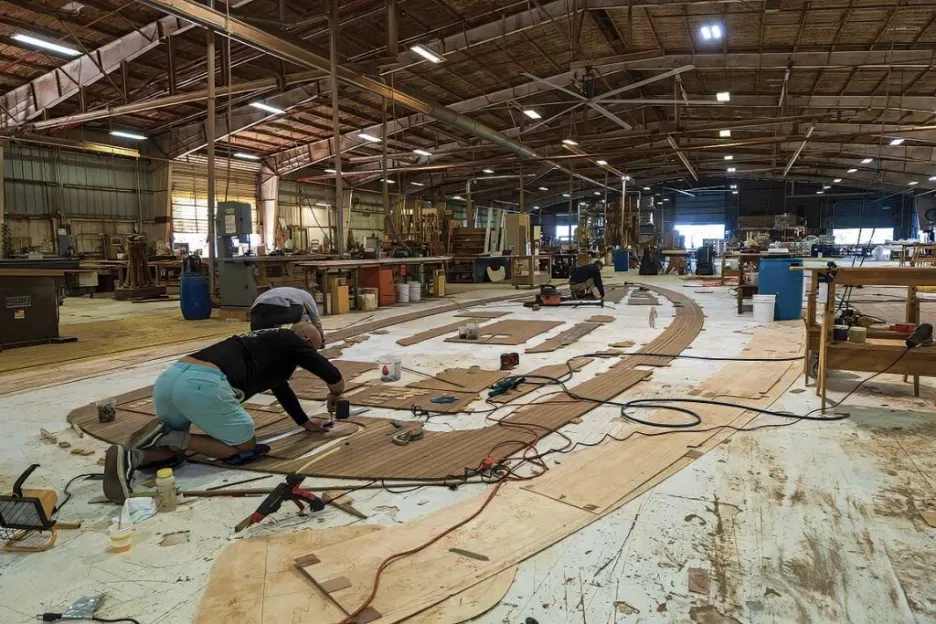
TeakDecking Systems has an intricate manufacturing process. Photo courtesy of TeakDecking Systems
Plantation Teak
There’s a more responsible way to produce teak, and that’s through forestry management. Ecological, economic, and social principles are blended to more sustainably grow teak: new trees are planted in place of those that are harvested, and the effort positively contributes to the local economy. It’s also a process that, when done correctly, complements the restoration and conservation of natural forests.
The Forest Stewardship Council (FSC), an international non-profit, sets standards based on a core set of principles and criteria, and creates a sustainable-product market by certifying the lumber. FSC-Certified teak plantations are in parts of Central America (notably Costa Rica), South America, Africa, and Indonesia. Plantations vary in their growth cycles, from short rotations of 10-30 years to longer-term investments of 50-70 years.
One challenge is that plantation teak has a perception of lower quality. However, with proper site selection and best practices in planting and managing, that has been proven false. The Global Teak Study, compiled under IUFRO (International Union of Forest Research Organizations), with data from across the world, shows that plantation-grown teak is equivalent to natural teak in terms of density, strength, and shrinkage.
The quality is primarily dictated by the log dimensions and proportion of heartwood. However, durability is shown to increase with age (and proportion of heartwood), regardless of whether a tree was grown on a plantation or in a natural forest. Teak also harvested in longer rotations (over 50 years) tends to yield better aesthetics when milled.
Note the reference to heartwood. This is the darker and more desirable part of the tree and tends to be a golden brown. The lighter sapwood, adjacent to the bark, does not carry nearly the same durability and strength and is almost entirely avoided in boatbuilding. Plantations do also sell the sapwood, so lumber needs to be carefully specified or selected.
Older trees have a higher percentage of heartwood. An 8-year-old tree may only have 30%, while a 50-year-old tree will have around 90%. This means the likelihood of receiving substandard lumber from old growth trees is also lower and may be what helps propagate the plantation misconceptions.
Considering world demand, plantation teak is still a scarce commodity, but it is expanding. Science is aiding in increasing the proportion of heartwood at earlier ages through accelerated growth and allowing for shorter growth rotations. However, the durability achieved only by older growth remains an important consideration for marine use.
Integrity risks also shouldn’t be overlooked. While the intentions of FSC-Certified teak are respectable, FSC transaction verifications in recent years have indicated more certified teak purchased by manufacturers than produced by the certified forest management units: a hint that some unregulated or conflict teak may still be entering our markets.
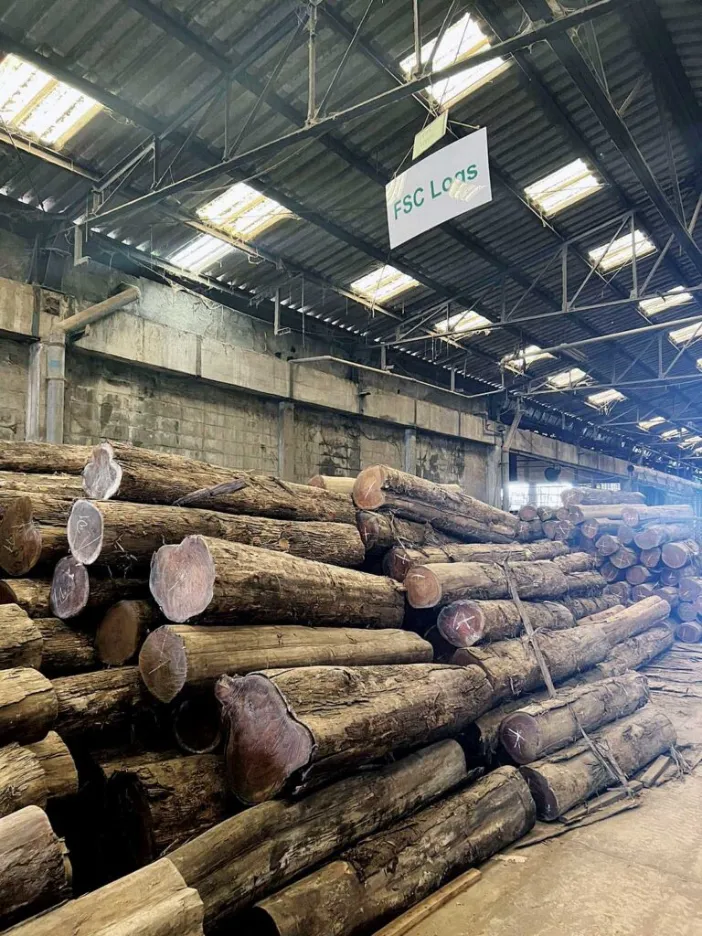
Thai green plantation teak harvested and ready to process. Photo courtesy of TeakDecking Systems.
Reclaimed
Teak may deserve a second life. Discarded boards from refit projects, pieces salvaged from boats that have hit their end of life, or used lumber from land-based applications can all be sources for reuse. Given the hardiness of teak, especially if it is well-maintained, an old piece can be cut and sanded to fit a new project onboard.
Eco Teak by EuroDesign takes another approach by reconstituting teak from teak sawdust (plantation sourced) and recycled plastic. The material is advertised as low-maintenance and durable, with good anti-slip properties.
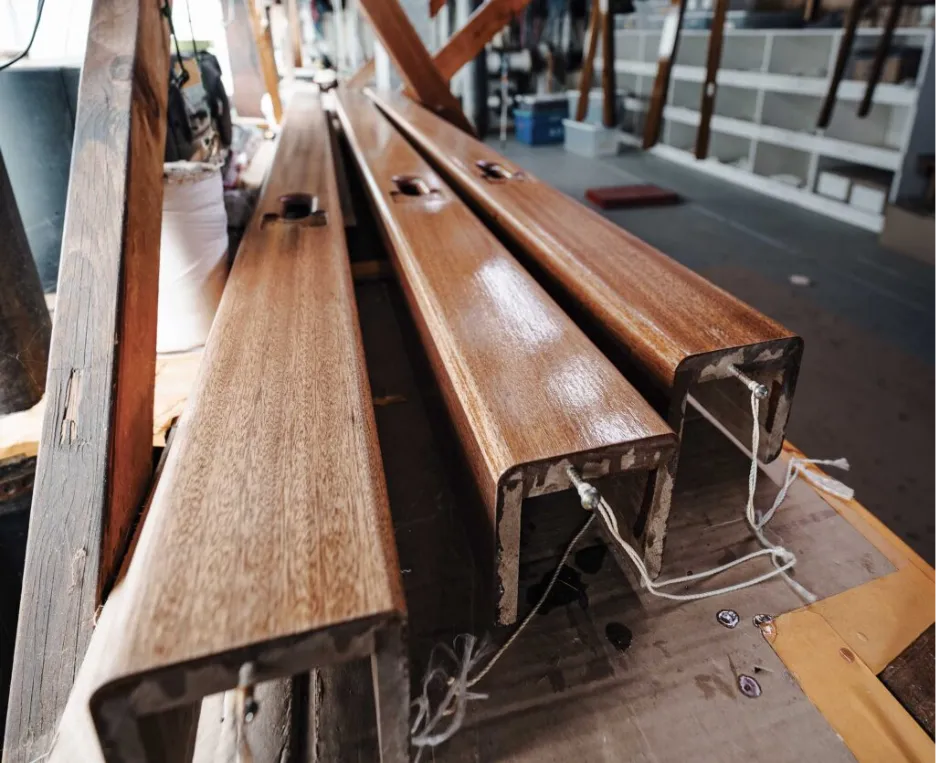
It’s hard to beat the classic warmth and look of finished teak. Photo courtesy of SeaDek
Alternative Hardwoods
Taking cues from traditional boatbuilding around the world, marine carpenters are reconnecting with species that served well for crossing oceans decades and centuries ago. Many offer similar characteristics to teak, but like anything related to a boat, also carry tradeoffs:
With West African roots, Sapele is golden to dark reddish brown and exhibits varying grain patterns. It carries good rot resistance but only moderately deters insects. The interlocking grain can be an issue with some woodworking operations, but it’s strong, glues and finishes well, and resists warping. Among other applications, it can make a beautiful steering wheel.
Quickly gaining popularity as a decking material, iroko is also known as African Teak: a nod to its origin in tropical regions of Central Africa. Like teak, it’s a golden yellow to medium brown, darkens over time, and weathers to gray, while also remaining resistant to rot and insects.
Early attempts of solid iroko planks as decking faced instability in color and shape, along with splintering. Instead, it is now layered and glued like a plywood and installed sideways so that the layers are visible. The layering resists warping and splintering, and provides a uniform color, with a tight grain. To help avoid a similar storyline to teak, lumber is available as FSC-Certified.
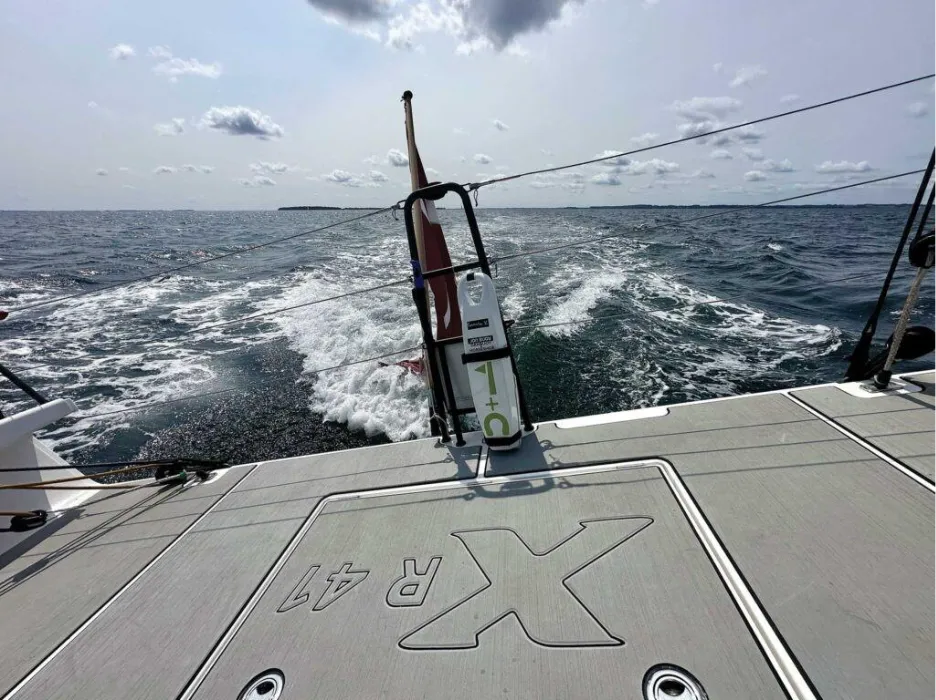
Seadeck’s expanded foam decking has a sportier look, but it’s waterproof and has great grip. Photo courtesy of Ryan Cove
Black Locust is impressively strong with excellent durability. It’s also indigenous to North America. It varies in color from pale greenish yellow to darker brown and darkens with age. A straight grain is also dense and hard, making it tough on tools. Black Locust’s resistance to rot competes closely with teak. In fact, the species has been used for fence posts for that exact reason. It can be glued and finished to make a beautiful tiller or worked in on other details onboard.
From the tropical regions of Central and South America comes a hardwood that is so dense that it sinks in water. This also means that it is difficult to work but balanced with exceptional durability and toughness against rot and pests (other than underwater marine borers). Ipe is varying shades of brown and can be glued with proper surface preparation.
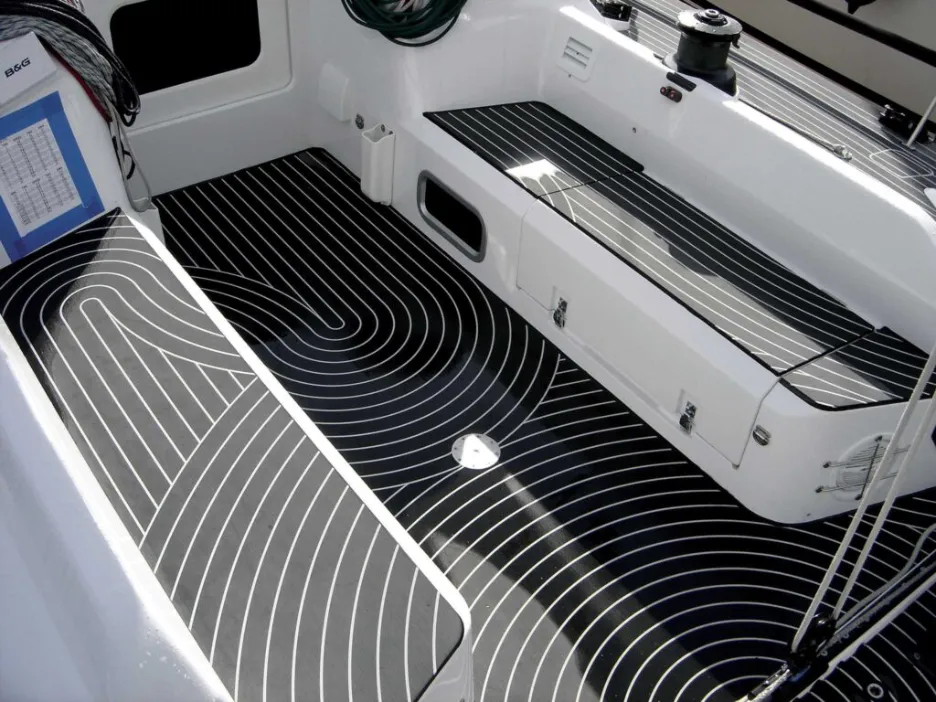
Synthetic decking provides customization options and durability. Photo courtesy of Esthec
Greenheart is variable in color from white to yellow to brown to black, with no difference in physical properties. It weathers well, and it is very resistant to rot and insects. Like other hardwoods it’s somewhat difficult to work because of its density. It grows naturally in northern South America.
A more familiar species for most boat owners, mahogany is indigenous to central America and the Caribbean, as well as the nearby parts of South America and the tip of Florida. Lumber comes in various shades of brown with grain that can be straight, irregular, or wavy. The durability varies with density and depends on the growing conditions. Its heartwood is resistant to termites, but not other insects. Mahogany is generally easy to work with and finishes and glues well.
Developed from sustainable and fast-growing softwoods, like pine, a modified softwood undergoes a manufacturing process that removes moisture from the original wood, infuses it with resin, and then cures it at an elevated temperature. The result is a product that is durable, strong, and aesthetically pleasing. While this approach is still maturing, early estimates suggest lifespans that could reach 50 years. Disposal at end of life presents an issue that is similar to fiberglass boat hulls.
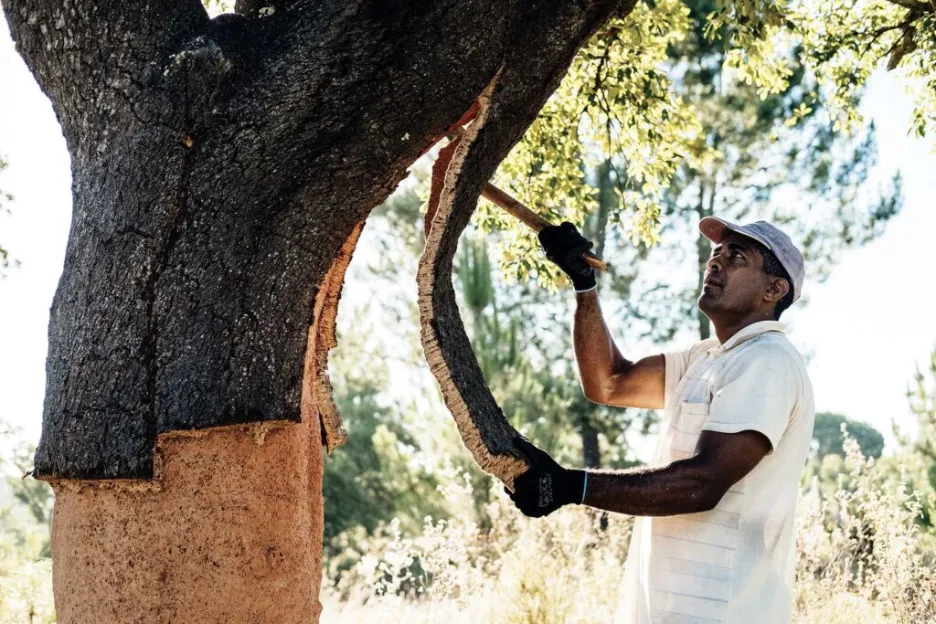
Removing the cork doesn’t kill the tree, and it can be re-harvested every nine years, contrasting to the decades it takes teak to mature. Photo courtesy of Navicork
Cork decks are soft underfoot and provide excellent traction, even when wet. Cork remains relatively cool in the sun and insulates the cabin from heat and noise. It’s also one of the lightest decking options available.
This concept is hardly new; cork has been used commercially for flooring in public spaces, like court buildings, colleges, and libraries, for well over 100 years. The cork itself is also sustainable and proper harvesting doesn’t damage the cork oak trees. Harvesting involves removing the outer layer of bark and letting the tree regenerate its protective layer over a period of at least nine years. Cork boat decking often uses high-quality ground scraps from wine cork manufacturing, making it a recycled material on top of that. The cork granules are combined with a synthetic binder and molded under pressure and heat to form the final product.
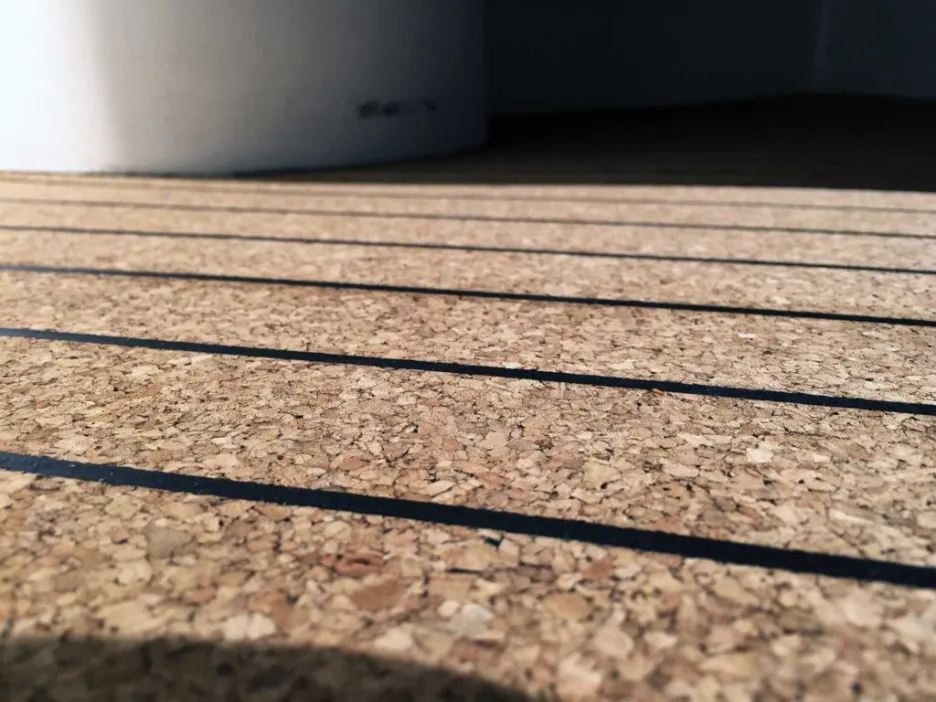
Cork decking provides excellent traction, even when wet and relatively cool in the sun and insulates the cabin from heat and noise. Photo courtesy of Esthec
Durability is often questioned with cork decks, but experience suggests a lifespan of 30 years or more. To achieve that timeframe, it’s advisable not to drag anchors across the deck or place heavy items down without good weight distribution. Aggressive solvents, fuel, and bleach can also damage cork decking.
The use of cork can extend below deck with cabin soles, table inlays, sound reduction for engine compartments, and accent trim. While cork has limited structural capabilities, it works well when mated with other materials, such as composites or wood.
Available products include Seacork, Marinedeck 2000, Navicork, AquaCork, and Oceancork.
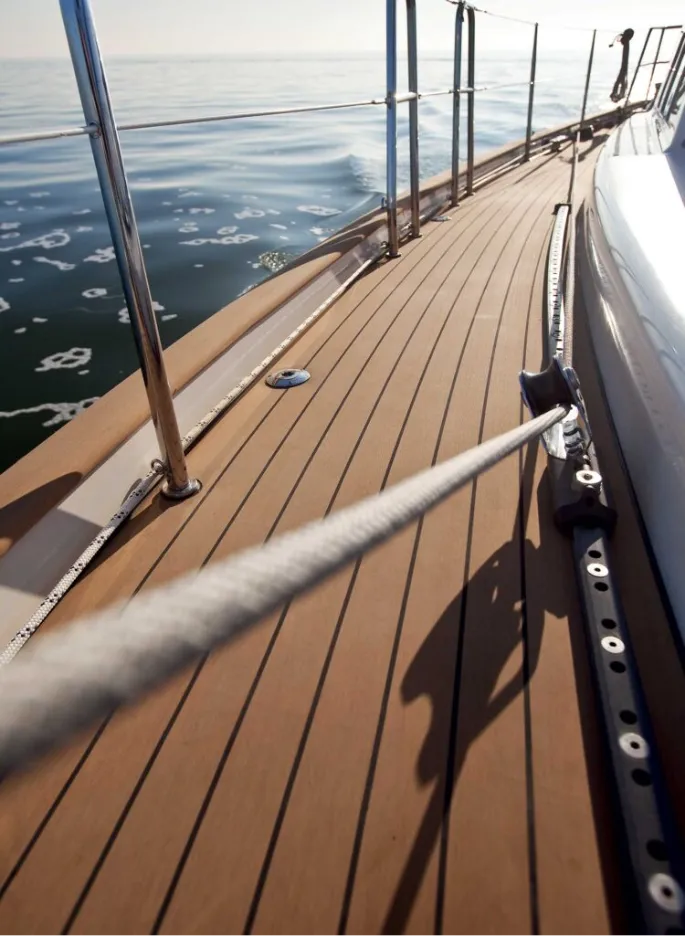
Photo courtesy of Seacork
Synthetics
While the geopolitical and environmental merits from another non-renewable resource are questionable, petroleum-based synthetics do present an alternative to teak. Some have recycled content or incorporate bio-based components to lessen the impact. A couple teak substitutes already presented contain a level of these synthetics too, in the form of binders. Tradeoffs continue to be a theme:
Polyvinyl Chloride (PVC) synthetic decking is simple to maintain and the most popular of the synthetic decking options. It resists wear and can even be lightly sanded to remove aesthetic damage. A range of colors are available to mimic new to weathered teak, and most brands even offer different caulking colors as an option.
PVC tends to get hot in the sun, especially darker colors, but Flexiteek (and sister-brand Isiteek) has a patented design that incorporates microballoons, both making their synthetic decking faster to cool and lighter for equal thickness. They also use a bio-attributed PVC to reduce their environmental impact. Permateek, PlasDeck, Tek-Dek, Nuteak, and Isoteak offer alternative PVC products that are solid PVC. Evo Decking is another option that offers the most realistic look.
Maintenance is limited to washing with soap and water (hot if trying to remove sunscreen), although harsh chemicals should be cleaned off immediately to avoid staining. Despite this ease of use, PVC tends to provide less grip than traditional teak. However, advances are being made to improve upon that, such as the high grain option by Permateek. Quality PVC products are expected to last 20 years, with some existing installations already exceeding that.
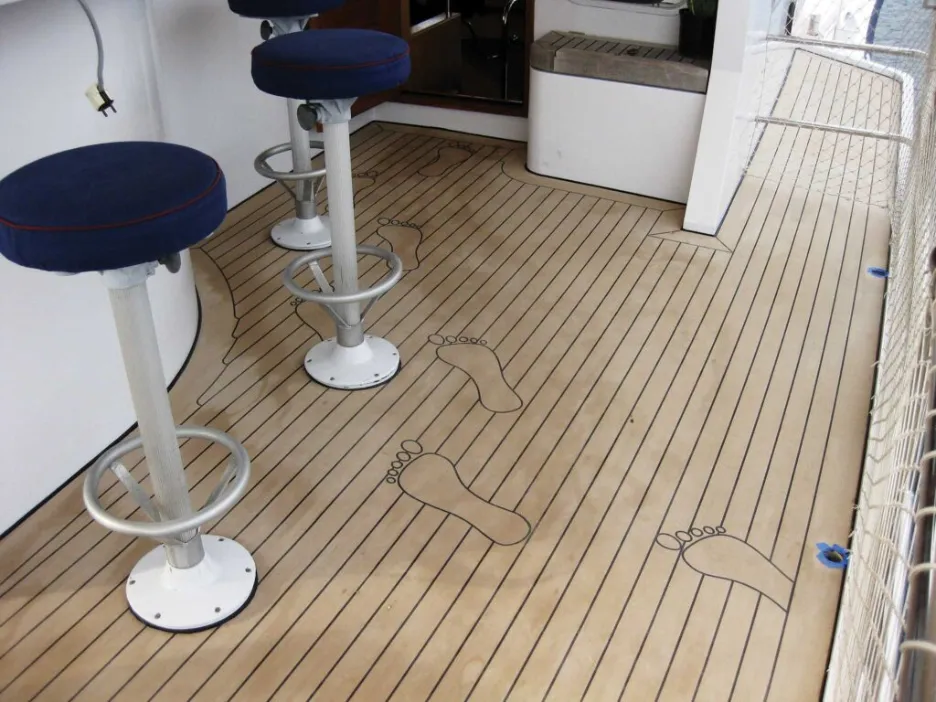
Esthec decking is a composite, and it comes in may different asthetics to suit different boats. It is made of 25% recycled materials. Photo courtesy of Seacork
• Polyurethane
Polyurethane decking solutions offer excellent UV-resistance and high strength. They can easily be secured over simple curves. And, the inherent material flexibility, not requiring plasticizers (like PVC), means polyurethane decking will not become brittle over time. Low maintenance and a 20-year life expectancy are complemented by the possibility of it being recycled at the end of its life.
EcoDeck, Herculan, and TDS CompositeDeck are polyurethane products available, and, like the other synthetics mentioned, at a cost savings when compared to teak deck installations.
• Expanded Foam
This choice is especially popular in the racing world. Closed-cell PE/EVA (polyethylene/ethylene-vinyl acetate) foam decks are waterproof and have great grip, wet or dry. They’re comfortable when sitting or standing for extended periods and absorb the shock of rough conditions. Custom designs add to the intrigue, but it is certainly a departure from teak and doesn’t try too hard to look the part. SeaDek is a popular option in this category and offers a three-year warranty, but these decks typically carry a 5-7 year life expectancy, or longer for light use and more limited UV-exposure.
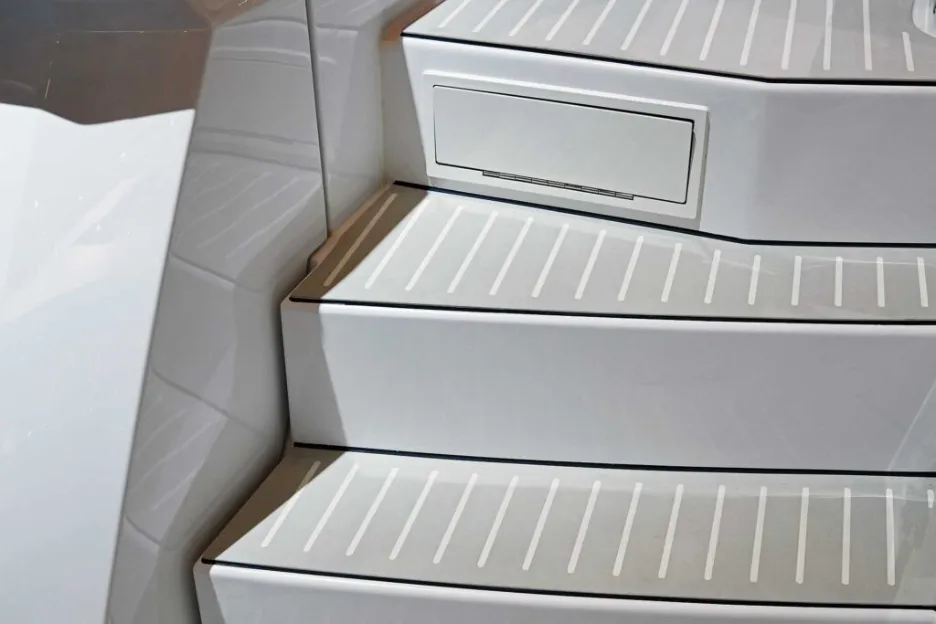
Photo courtesy of Seacork
• Composite
Esthec, a Dutch Company, delivers a unique composite solution. Their decking is a patented thermoset blend of 25 ingredients that include natural fibers, biobased resins, minerals, and color pigments. It doesn’t contain PVC or wood and is composed of 25% recycled materials. The result is a durable material that resists warping and fading and is highly durable due to viscous elastic properties. The material properties of Esthec and surface profile provide excellent grip and is resistant to most oils and grease.
Boatbuilding has evolved over time and will continue to do so. Advances in materials create opportunities for developments in comfort and performance. And change through design can alter the requirement for materials. Sailing is a tactile experience, and materials will always be at the center of the design and build deliberations.
Close your eyes again. Imagine 10 knots of breeze, a close-hauled course, and an open ocean ahead. What do you feel underneath your feet as you walk towards the bow? What do you sense in your hands as you grip the handrails? Is there warmth to your steering wheel when you return to the cockpit? What do you envision?
As we navigate this new path and the industry shifts, it will be interesting to see if the next generations will even recognize teak as a boatbuilding material. It may just reside as an exotic word in the stories that we pass down, occasionally appearing out of the fog only to be lost again.
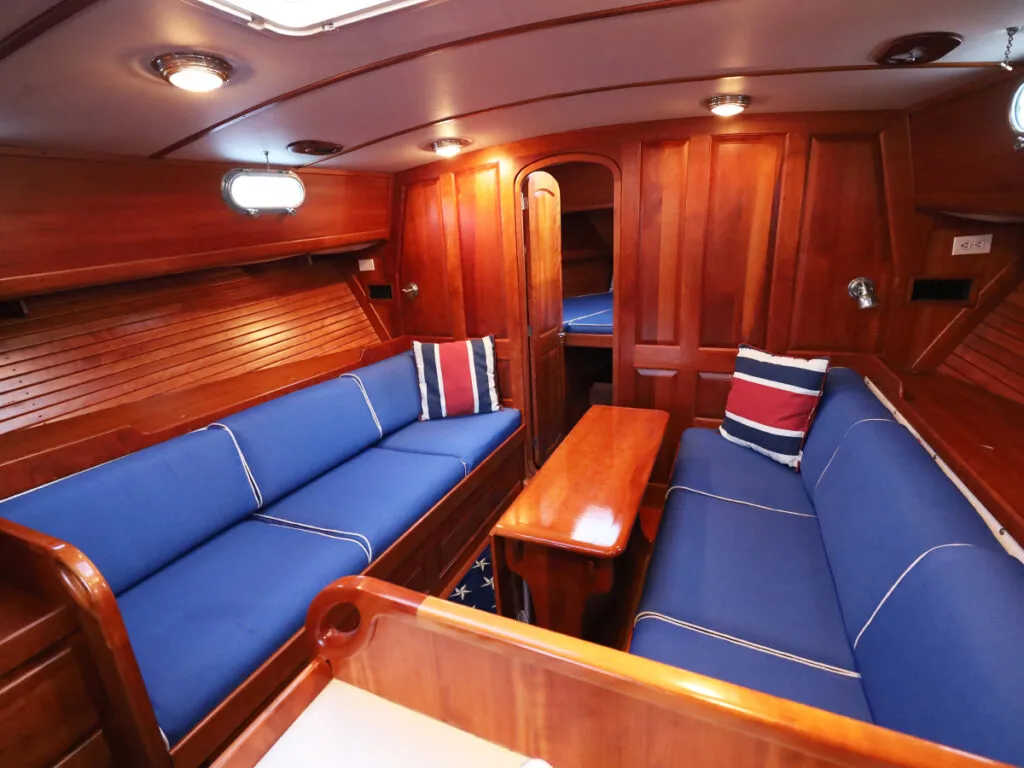
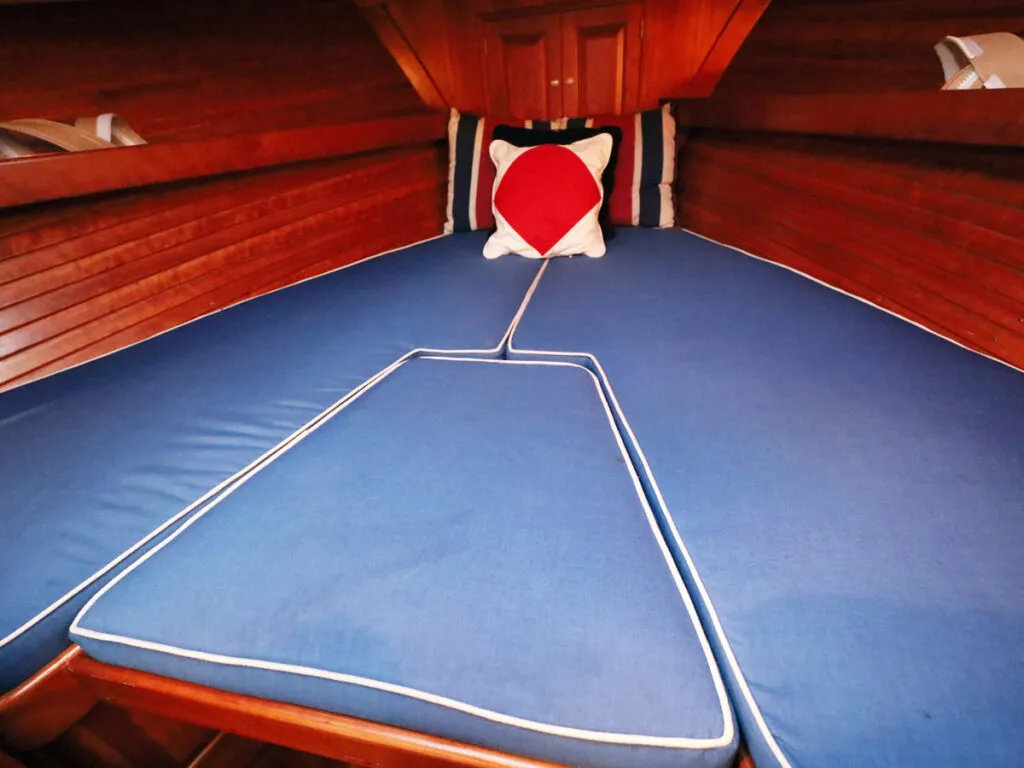
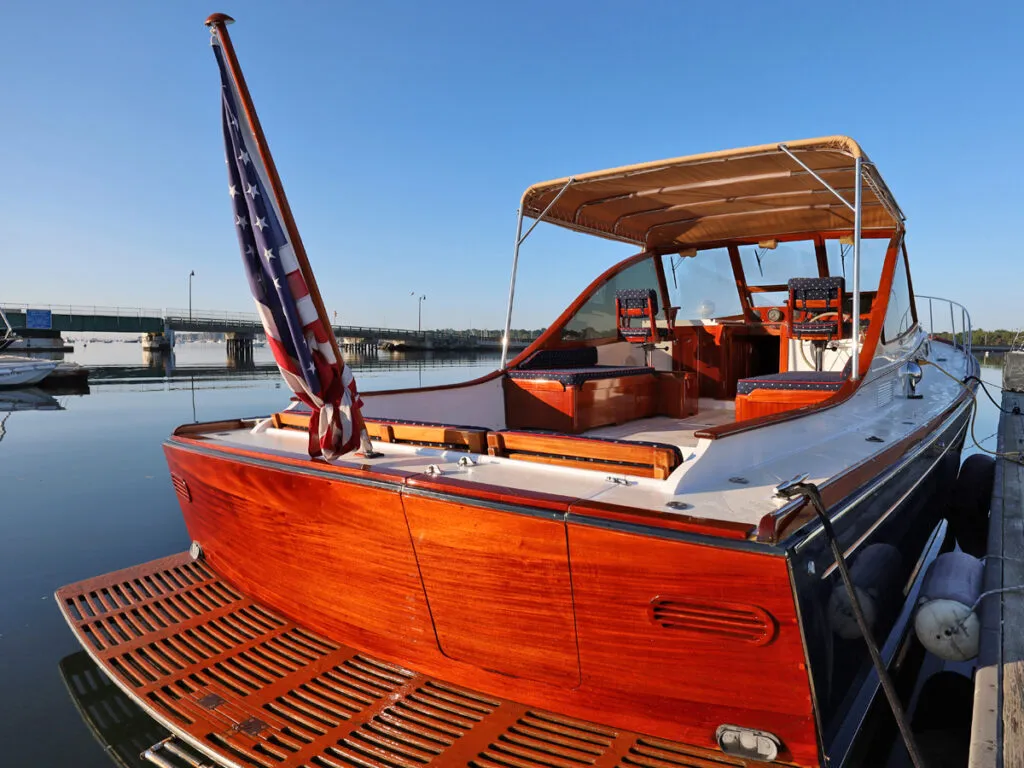
At Wellington Yacht Partners, we specialize in connecting discerning buyers with exceptional yachts—whether for coastal cruising, daysailing, or serious passagemaking. Among our current offerings are two very different, yet equally compelling, 44-foot yachts that exemplify quality craftsmanship and distinctive design.
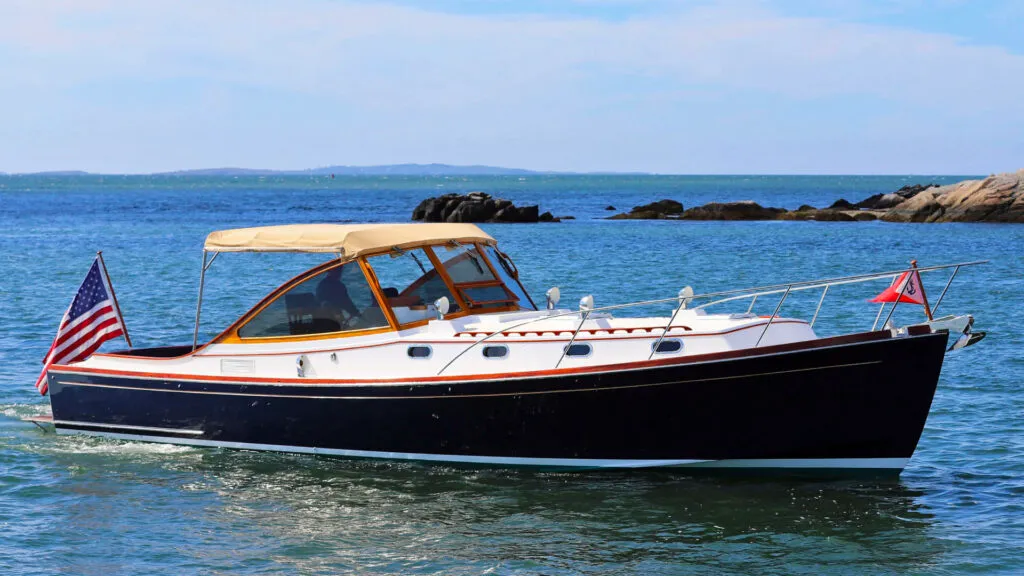
Built in Northeast Harbor, Maine, by Able Marine and designed by the renowned Chuck Paine, the ABLE 44 is a rare find among Downeast express cruisers. ZIG ZIG, hull #4 of the “Wolf” class, has been maintained and upgraded to a high standard, including a recent 1,000-hour service on her reliable twin Volvo engines. With two roundtrips to Florida from New England and a recent run up from Norfolk this spring, she has proven her offshore capability and cruising comfort time and again.
Her classic lines, robust construction, and thoughtful layout make her a top choice for those seeking a Downeast-style powerboat with pedigree. Ideal for extended coastal cruising, weekend getaways, or as an exceptional dayboat for a gaggle of family and friends, ZIG ZIG offers serious performance wrapped in timeless style.
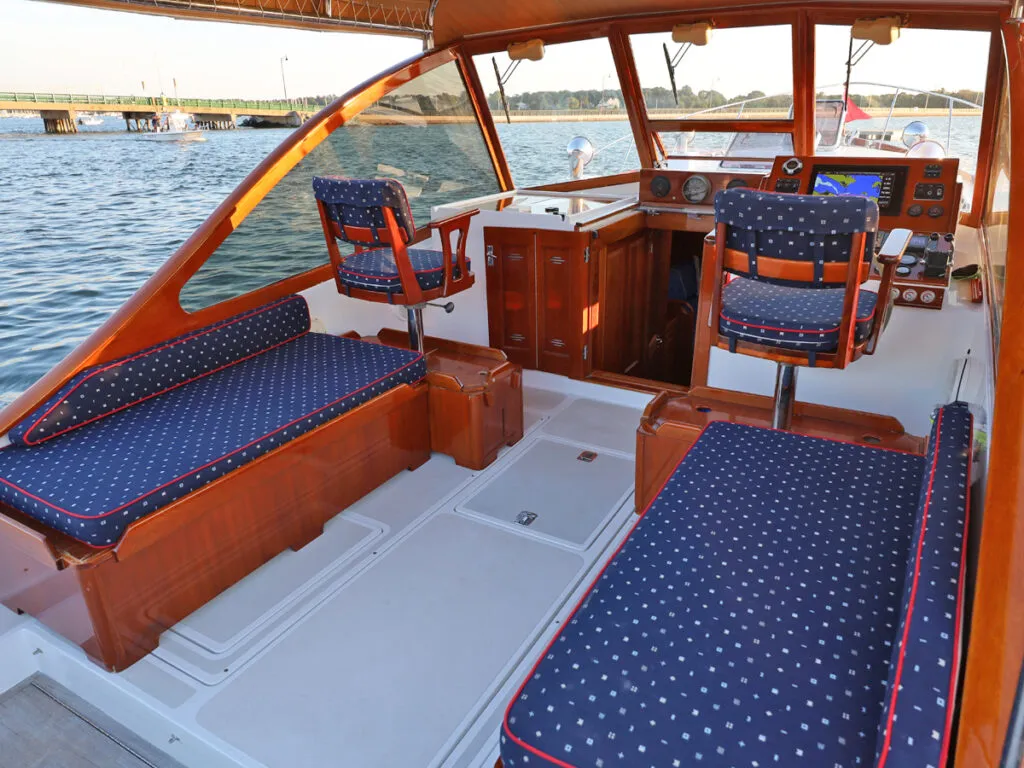
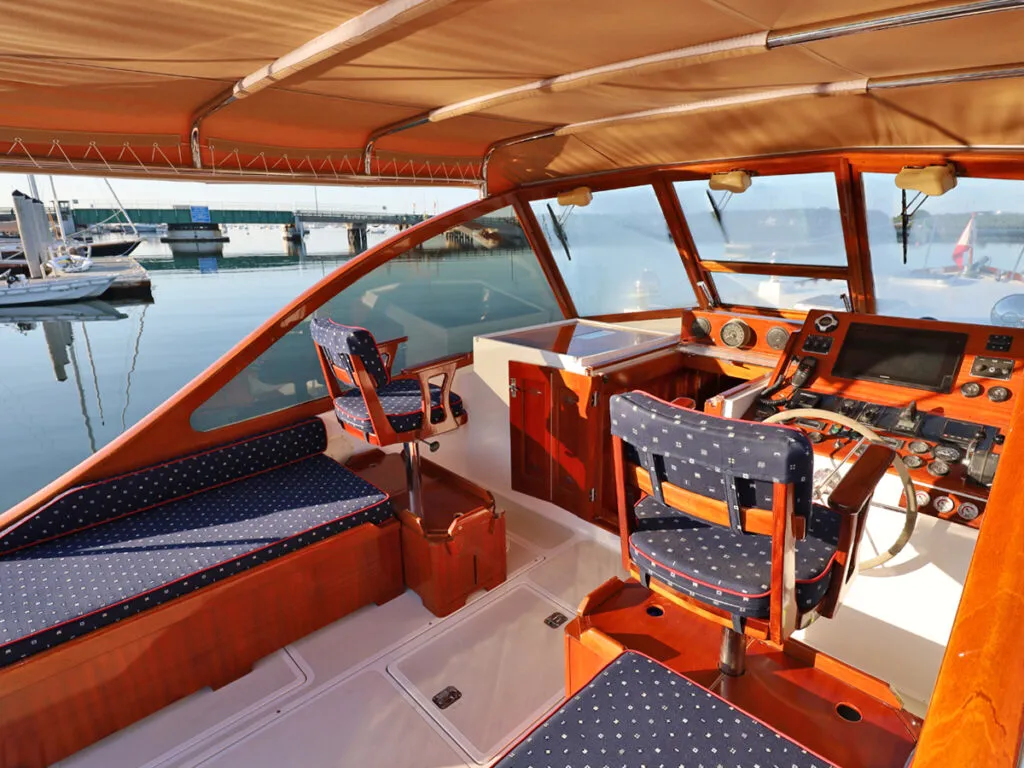
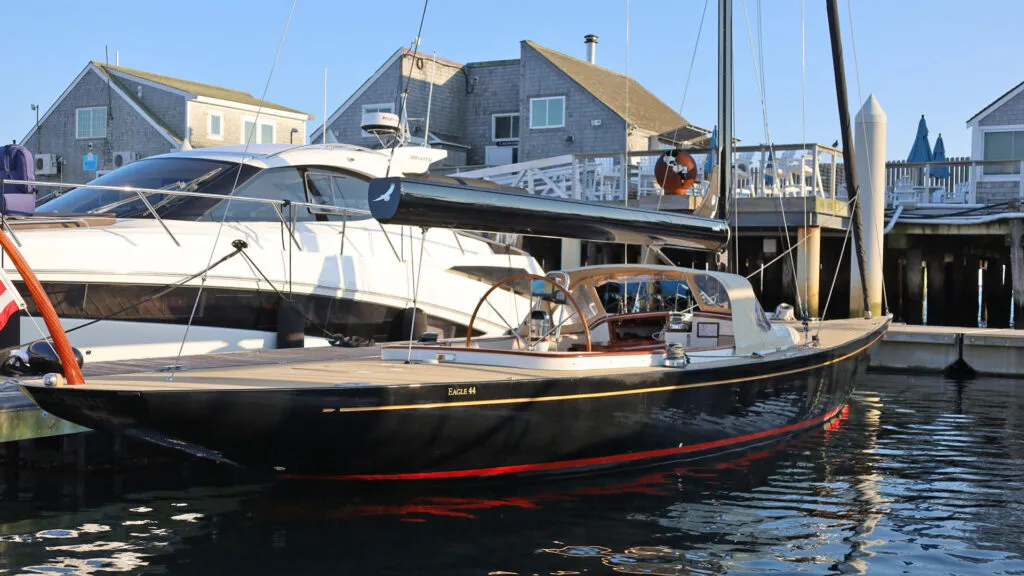
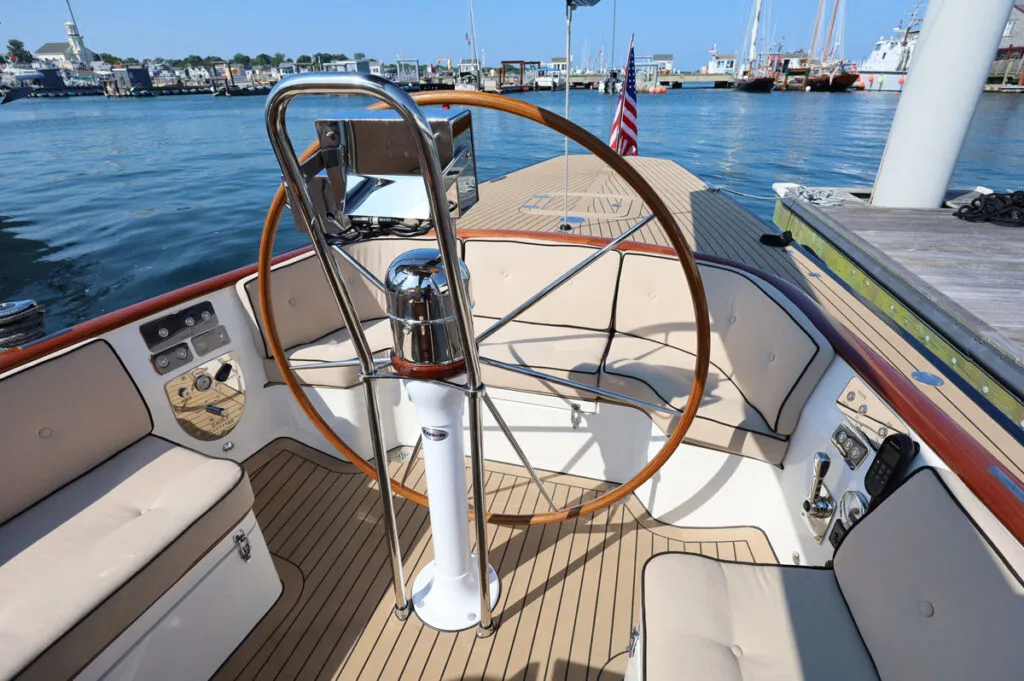
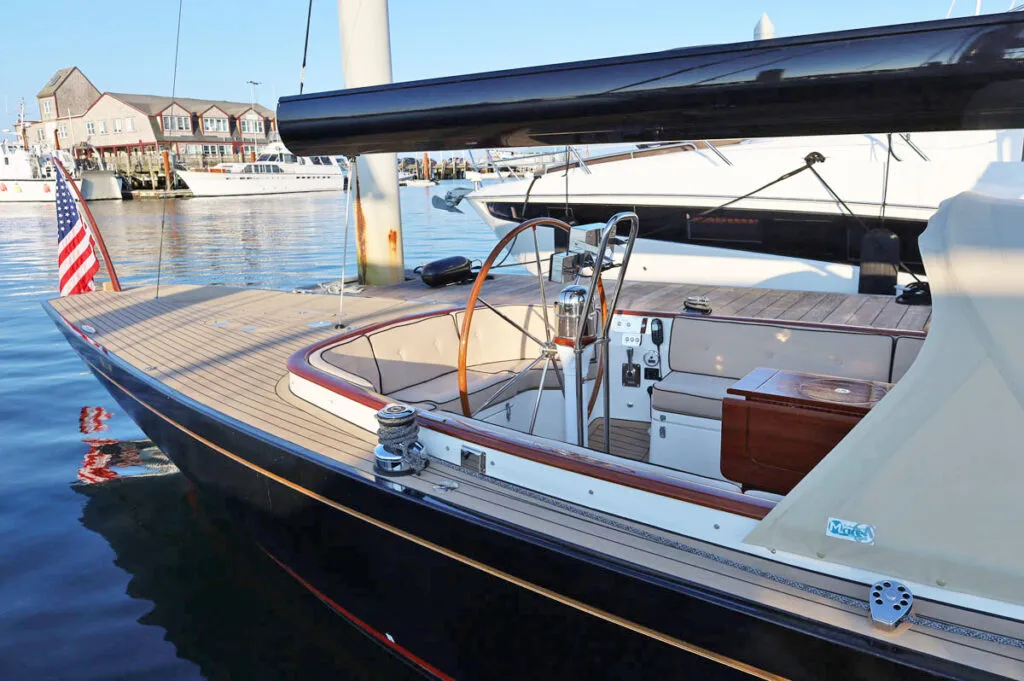
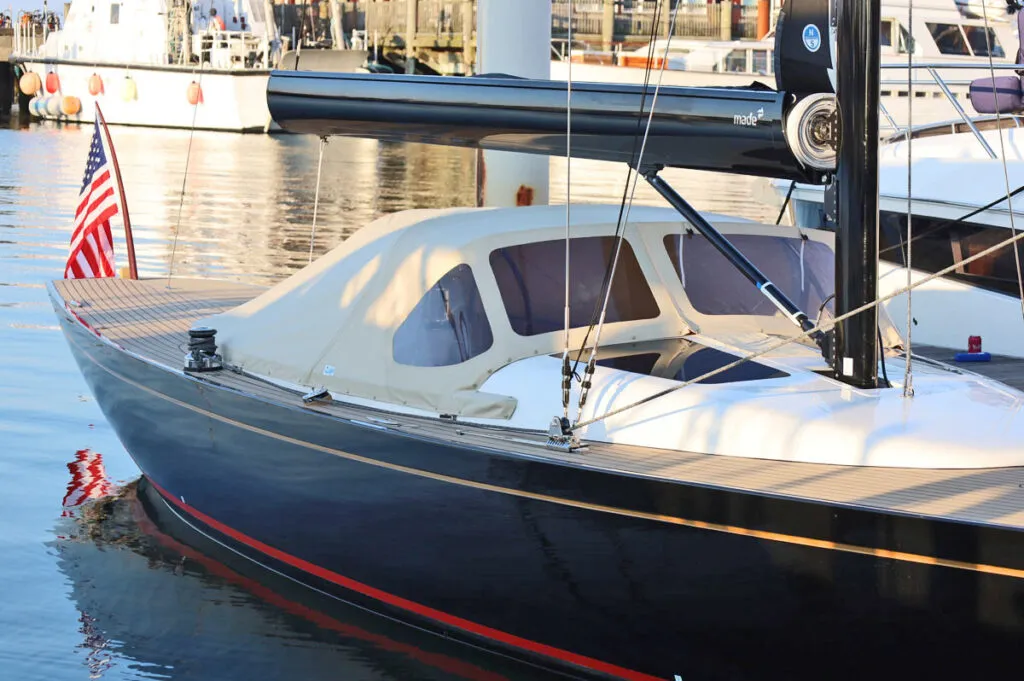
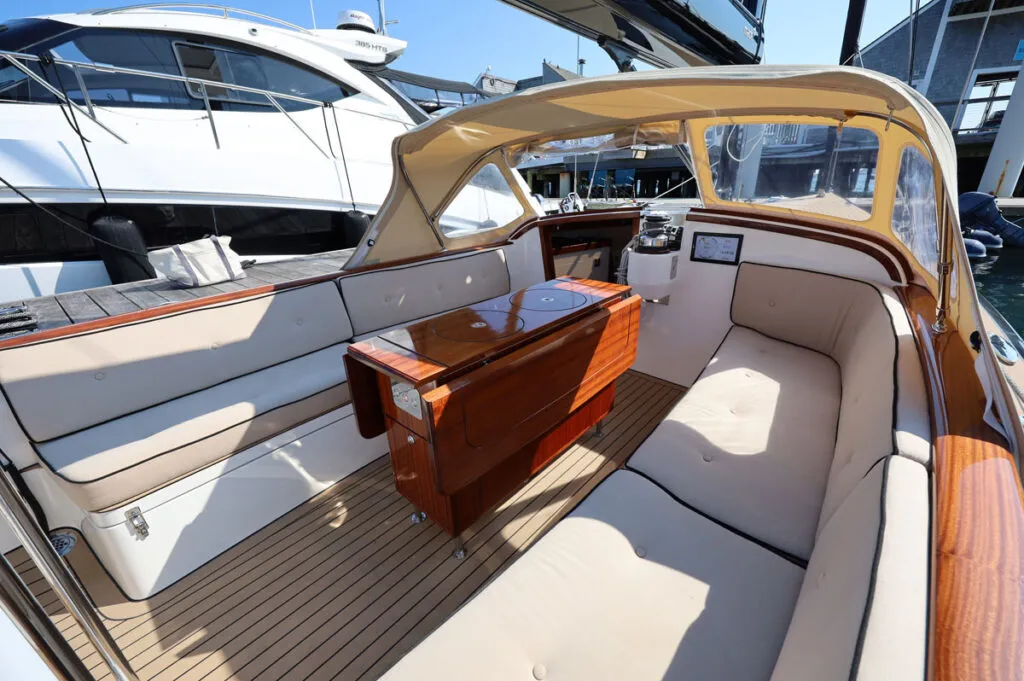
For those drawn to the elegance of traditional sailing with the ease of modern handling, the Eagle 44 by Leonardo Yachts is a showstopper. Designed by Dykstra Naval Architects, this Dutch-built daysailer combines a long overhang hull form with high-tech performance.
This 2024 model is beautifully equipped and features a carbon rig, electric winches, and an inviting cockpit perfect for entertaining. Designed to be singlehanded with ease and admired by many, the Eagle 44 is ideal for owners who love to sail—and be seen sailing—in style.
Whether racing casually around the harbor or taking out friends for an evening cruise, this luxury daysailer delivers unforgettable experiences with a touch of flair.
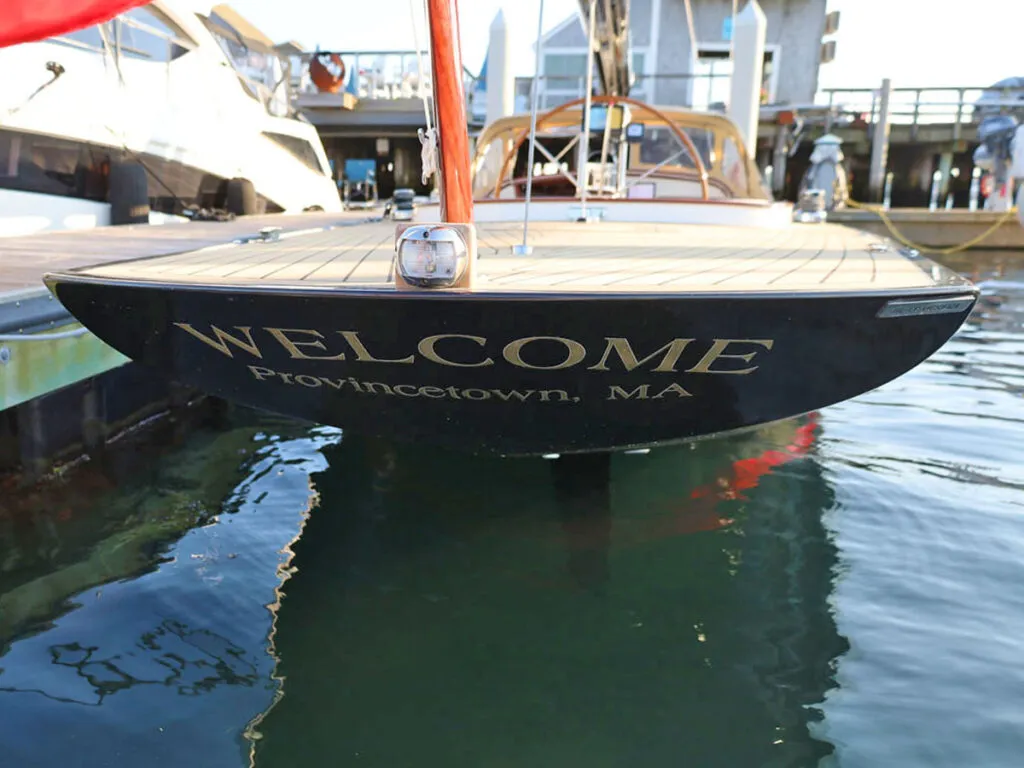
Yachts of this caliber don’t just appear—they’re entrusted to us by owners who value expertise, discretion, and results. Whether you’re looking to buy, sell, or simply explore what’s possible, our experienced team is here to guide you through every step of your yachting journey.
🧭 Ready to find your perfect yacht or list yours with confidence?
📩 Contact Wellington Yacht Partners today.
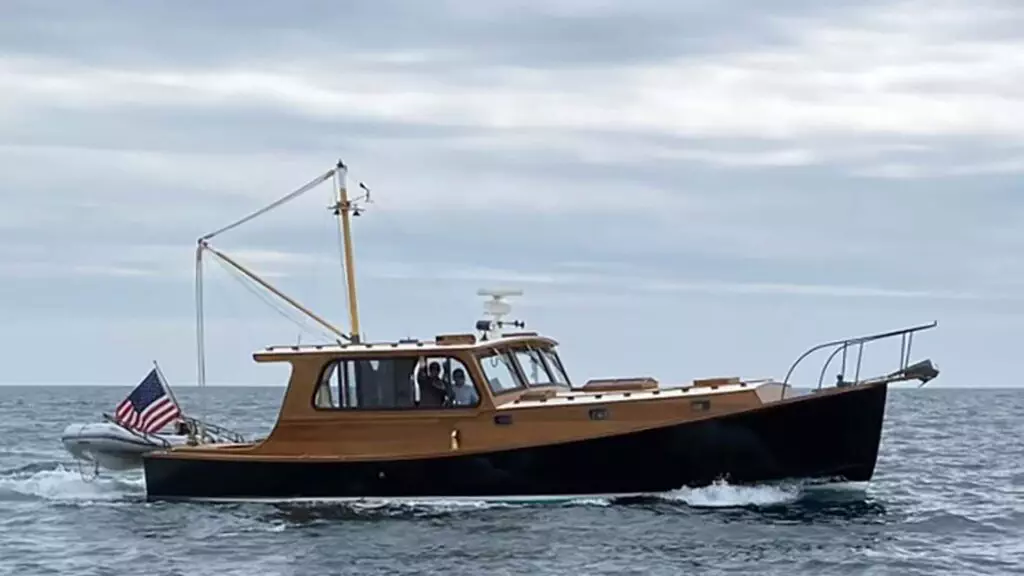
The 2009 John Williams Stanley 38, MAISIE MCGOO, stands as a shining example of Downeast craftsmanship, blending classic design with modern functionality. Built by the esteemed John Williams Boat Company, this vessel exemplifies the heritage of Maine boatbuilding, where superior craftsmanship meets seaworthy performance. Whether you’re cruising along the coast or venturing offshore, the Stanley 38 offers a smooth, stable ride with unmistakable style and reliability.
John Williams Boat Company has long been known for producing custom and semi-custom yachts that embody the Downeast tradition. MAISIE MCGOO is no exception, offering a striking balance between classic aesthetics and contemporary comforts. With its refined hull lines, sturdy construction, and efficient power, this vessel is designed to deliver exceptional performance in a variety of conditions.
The 2009 Stanley 38 features a solid fiberglass hull with a semi-displacement design, providing a comfortable and fuel-efficient ride. With a well-proportioned beam and a deep forefoot, this vessel cuts through chop with ease while maintaining excellent stability. Powered by a reliable diesel engine, the Stanley 38 is built for both speed and economy, making it a top choice for extended cruising or weekend getaways.
The boat’s Downeast profile is not only visually appealing but also highly functional, with a protected wheelhouse and generous cockpit space for fishing, entertaining, or relaxing. The helm station is designed for optimal visibility and ease of operation, ensuring a stress-free experience for captains of all experience levels.
The interior of MAISIE MCGOO is a testament to fine craftsmanship, featuring high-quality wood finishes, thoughtful layouts, and attention to detail. The main cabin is both inviting and practical, offering comfortable seating, a well-equipped galley, and ample storage for extended voyages.
Below deck, the sleeping quarters provide a cozy retreat, with a spacious V-berth and additional accommodations designed for comfort and functionality. The head is thoughtfully designed with modern conveniences, ensuring that every journey is as comfortable as possible.
One of the standout features of MAISIE MCGOO is its versatility. Whether you’re a seasoned yachtsman looking for a dependable cruiser or a family seeking a stylish and reliable vessel for weekend adventures, this boat delivers on all fronts. Its combination of Downeast charm, rugged construction, and modern amenities makes it a sought-after choice for those who appreciate both tradition and performance.
The 2009 John Williams Stanley 38 is a true gem in the world of Downeast powerboats. With its impeccable craftsmanship, classic styling, and well-balanced performance, it offers an exceptional boating experience for those who value quality and tradition. For anyone in search of a distinguished cruiser that seamlessly blends elegance and functionality, the Stanley 38 is a vessel worth considering.
Hinckley Sou’wester 42, 51 & 59: Timeless Craftsmanship and Performance
Few yacht builders command the same level of admiration and respect as Hinckley, and their Sou’wester series stands as a testament to the brand’s commitment to excellence. Designed for performance, elegance, and comfort, the Sou’wester 42, 51, and 59 remain among the most desirable classic sailboats in the world. Each model offers unique qualities that make them ideal for a variety of sailing adventures, from coastal cruising to offshore passages.
Designed by the renowned naval architects McCurdy and Rhodes, the Hinckley Sou’wester 42 has long been celebrated for its graceful lines and impeccable sailing capabilities. This yacht is beloved by experienced sailors for its ease of handling, balanced performance, and timeless craftsmanship.
One standout example of this exceptional design is MYSTARRY, a superbly maintained Sou’wester 42 that exemplifies the best of Hinckley’s workmanship. She has been meticulously cared for and remains in excellent cosmetic condition, reflecting the pride of ownership that these yachts inspire. With its blend of beauty, functionality, and enduring value, MYSTARRY represents a rare opportunity for discerning buyers.
The Hinckley Sou’wester 51 is a truly versatile cruiser, offering exceptional craftsmanship, luxurious accommodations, and impressive sailing performance. Among these remarkable yachts, KISMET stands out as a rare and distinctive mid-cockpit model that exemplifies the Hinckley legacy.
KISMET is meticulously detailed throughout, showcasing the hallmark quality and elegance that define the Hinckley name. Designed for both comfort and reliability, she is extensively equipped for long-distance cruising. Her ICW-friendly rig features in-mast furling, ensuring effortless handling for various sailing adventures, whether navigating coastal waterways or embarking on offshore passages.
Her appeal is further enhanced by recent upgrades, including a new engine, generator, state-of-the-art electronics, and a custom hard top fitted with solar panels for sustainable energy efficiency and extended self-sufficiency. A true pedigree yacht, KISMET seamlessly blends quality workmanship, luxury accommodations, and practicality, making her an exceptional vessel in excellent condition. For those seeking an elegant yet capable cruiser, KISMET presents an unparalleled opportunity to own a yacht that is as beautiful as she is functional.
As the last and most advanced of the 16 Sou’wester 59s built by the Hinckley Yacht Company between 1983 and 2001, ZANETIA represents the pinnacle of Hinckley’s craftsmanship. Designed by McCurdy & Rhodes, this sloop-rigged yacht seamlessly blends performance, luxury, and ease of handling.
ZANETIA’s interior is a masterpiece of craftsmanship, featuring satin varnished cherry wood, solid teak, and holly cabin soles. Her spacious layout is enhanced by ample ports and hatches, which create a bright and airy atmosphere below decks. Comfort is paramount, with an Espar heating system, reverse cycle air conditioning, a high-capacity water maker, and generous refrigeration and freezer spaces.
One of ZANETIA’s standout features is the sheer amount of space on board, providing ample room for guests, provisions, and equipment. Electric winches and an electric headsail furler make her easy to sail, while her keel-centerboard configuration ensures versatility. With a draft of 6 feet 6 inches with the board up and 12 feet 6 inches with the board down, she offers excellent upwind performance without sacrificing access to remote anchorages.
The owner’s cabin, complete with a private companionway to the aft deck, adds an extra level of privacy and luxury. With sleeping accommodations for eight across three private cabins and two berths in the salon, ZANETIA is an ideal yacht for those who seek adventure without compromising comfort.
The Hinckley Sou’wester 42, 51, and 59 are more than just sailboats—they are floating works of art, designed for discerning sailors who appreciate impeccable craftsmanship, superior performance, and timeless beauty. Whether it’s the well-balanced elegance of the Sou’wester 42 MYSTARRY, the versatile and upgraded Sou’wester 51 KISMET, or the spacious and luxurious Sou’wester 59 ZANETIA, each of these yachts offers an unparalleled sailing experience.
For those in search of a truly remarkable yacht, these Hinckley Sou’westers present rare and extraordinary opportunities. With their timeless design, enduring value, and legendary performance, they continue to set the standard for excellence in sailing.
When it comes to buying or selling a yacht, the process can be both thrilling and complex. Whether you’re a seasoned sailor looking to upgrade your vessel or a first-time buyer dreaming of your perfect boat, having a trusted and experienced yacht broker on your side makes all the difference. At Wellington Yacht Partners, we specialize in providing personalized, professional service to ensure that every transaction is smooth, transparent, and rewarding. Here’s why you should choose us for your next yacht purchase or sale.
With years of industry experience, Wellington Yacht Partners understands the intricacies of the market better than anyone. Our brokers have worked with a diverse range of clients, from first-time buyers to seasoned yacht owners, across various types of yachts and boats. Whether you’re seeking a luxury superyacht, a performance sailboat, or a family-friendly cruiser, our team has the knowledge to help you find the right vessel or navigate the selling process.
We’ve seen and handled just about every scenario, which means you can count on us for practical advice, market insights, and guidance that truly puts your best interests first.
At Wellington Yacht Brokers, we take pride in offering a personalized approach to every transaction. We recognize that no two clients are the same, and that’s why we take the time to understand your unique needs and preferences. Whether you’re buying or selling, our brokers will work closely with you to develop a strategy that aligns with your goals.
For buyers, this means offering a curated list of yachts that meet your specific criteria, whether it’s design, budget, performance, or amenities. For sellers, we’ll develop a targeted marketing plan to attract the right buyers for your yacht, ensuring you get the best value and the most efficient sale.
One of the greatest advantages of working with Wellington Yacht Partners is our wide network of industry contacts, including buyers, sellers, yacht manufacturers, and service providers. We have established relationships with reputable boatyards, surveyors, financing partners, and yacht maintenance professionals. This network allows us to offer a seamless, full-service experience from start to finish, whether you’re buying or selling.
For sellers, our established network ensures that your yacht is exposed to a wide range of qualified buyers. For buyers, we have access to yachts that may not yet be listed publicly, giving you a competitive edge in finding your dream yacht before it hits the market.
The yacht market is constantly evolving, with trends changing in response to new technologies, design innovations, and shifting customer preferences. At Wellington Yacht Partners, we stay on top of these trends by constantly monitoring the market and understanding what’s in demand. Our brokers are experts in market valuation and can provide you with a detailed, realistic assessment of a yacht’s current value.
For buyers, we’ll ensure you’re getting the best possible deal, based on up-to-date market data. For sellers, we’ll help you price your yacht competitively, ensuring you attract serious buyers while still getting the return you deserve.
Whether you’re buying or selling, the process can be time-consuming and complicated without the right expertise. Our goal is to make your experience as seamless and stress-free as possible.
For buyers, we’ll guide you through every step—from finding the right yacht and arranging sea trials to securing financing and finalizing the paperwork. For sellers, we handle all the logistics, including listing your yacht, scheduling showings, conducting negotiations, and managing the sale’s paperwork.
We’re here to manage the details so you can focus on what really matters—whether that’s finding the perfect boat to explore the open waters or selling your yacht for top dollar.
While we’re based in the heart of the New England yacht community, Wellington Yacht Partners has a global reach. Our team regularly works with clients from all over the world, from Europe to the Caribbean to the Pacific. We have access to international listings and can help you navigate the complexities of buying or selling a yacht across borders, including handling paperwork, taxes, and logistics.
Locally, we have deep connections within the New England boating community, and we pride ourselves on being in tune with the specific needs and preferences of boaters in the region. Whether you’re interested in a coastal cruiser, a racing yacht, or an island-hopping boat, we know the New England market inside and out.
At Wellington Yacht Partners, integrity is at the core of everything we do. We understand that buying or selling a yacht is a major decision, and we believe in maintaining an open, honest relationship with our clients every step of the way. You’ll never feel pressured to make a decision, and we’re always available to answer questions and provide advice based on your best interests.
When you choose Wellington Yacht Partners, you can trust that we’ll provide clear, transparent communication throughout the process, ensuring there are no surprises.
The service doesn’t end when the sale is complete. We believe in building long-term relationships with our clients, which is why we offer ongoing support even after the deal is done. Whether it’s advice on yacht maintenance, introductions to top-tier service providers, or help with finding crew or charter opportunities, we’re here to assist long after the sale has been completed.
Our commitment to exceptional service doesn’t stop at the sale; we’re dedicated to making sure you enjoy every moment on the water.
Buying or selling a yacht can involve complex negotiations. Whether you’re making an offer or receiving one, it’s important to have someone who can advocate for your interests while keeping the process smooth and professional. At Wellington Yacht Partners, our brokers have years of experience handling both sides of the deal, ensuring you get the best price and the most favorable terms.
Choosing the right yacht broker is essential for anyone looking to buy or sell a yacht. At Wellington Yacht Partners, we bring a combination of experience, personalized service, market knowledge, and integrity to every transaction. Whether you’re looking for your next dream yacht or ready to sell your current vessel, we’re here to make the process as smooth and rewarding as possible.
Contact Wellington Yacht Partners today to learn more about how we can assist you in buying or selling a yacht. We’re passionate about helping you navigate the exciting world of yachting, every step of the way.